Premium Religious Gifts in India: A Buyer's Guide to Silver Idols Above Rs 3,000

Last updated 19 September 2026 · About a 12 minute read · By Kavita Rao
Premium religious gifts in India are not simply the expensive ones. They are the pieces whose size, finish and presentation match the weight of the occasion, usually in the ₹3,000 to ₹25,000 range depending on how close you are to the recipient. Above that band, what you are paying for shifts from craft to metal value, and the two are not the same thing.
This guide covers what actually makes a devotional gift feel premium, honest rupee bands, how to read a silver listing without getting fooled, ideas by occasion and by recipient, and the moments when a big spiritual gift is the wrong call.
Key takeaways
- Presence beats price. A 7 inch piece with crisp hand-finished detail reads as premium. A tiny idol in a big box does not, whatever it cost.
- The honest premium band is ₹3,000 to ₹10,000 for close family and senior colleagues. Above ₹25,000 you are usually buying bullion weight, not better craftsmanship.
- Know what you are buying. Sterling and 999 silver are sold by weight and carry a hallmark. Silver-plated pieces are sold by size and finish. Both are legitimate; only one is priced per gram.
- Match the deity to the moment, not to your own preference. Lakshmi for a new home, Hanuman for protection and new ventures, Ganesha for a beginning of any kind.
- Presentation carries half the impression. A velvet box, a red cloth and a handover at a calm moment turn a good piece into a memorable one.
- Do not out-gift the occasion. An oversized gift can embarrass the receiver and quietly obligate them to reciprocate.
What makes a religious gift premium?
A religious gift reads as premium when it has visible presence, crisp detailing, a finish that holds its shine, and packaging that protects it. Price follows those four things. It does not create them.
Think about how a gift is actually received. It comes out of a box, it gets held, and within about five seconds the receiver has formed an opinion. Everything that happens in those five seconds is physical.
Presence is the first of the four. A 6 to 8 inch idol commands a console table or a mandir shelf. A 2 inch piece, however fine, disappears on it. If you are spending serious money, buy scale before you buy anything else.
Detail is the second. Look at the face, the fingers, the folds of cloth and the jewellery on the idol. Sharp, defined edges mean a good mould and real hand-finishing afterwards. Soft, rounded, slightly melted-looking features mean neither.
Finish comes third, and it is the one people misjudge most often in photographs. A bright, even silver lustre that throws light back cleanly is the mark of proper plating or proper polish. A dull grey or patchy surface will only get worse with age.
Packaging is the fourth and the most underrated. A velvet-lined box with a snug fit signals that the seller expects the piece to be gifted. A thin carton with bubble wrap signals the opposite.
None of those four things require the piece to be solid metal. That is worth saying plainly, because the Indian market has trained buyers to equate "premium" with "sold by the gram".
Once you know what premium looks like, the next question is how much of it the occasion actually calls for.
How much should you spend on a premium religious gift?
For most premium occasions in India, ₹3,000 to ₹10,000 is the honest band, with ₹10,000 to ₹25,000 reserved for weddings, milestone anniversaries and very senior relationships. Below ₹3,000 you are in thoughtful-gift territory, which is perfectly good but a different conversation.
Here is how the bands actually behave in the market:
| Budget band | What it buys | Right for |
|---|---|---|
| ₹3,000 to ₹5,000 | A 4 to 5.5 inch detailed idol or a decorative vastu piece, gift-boxed | Griha pravesh, festival gifts to close family, a senior colleague |
| ₹5,000 to ₹10,000 | A 6 to 10 inch statement piece, or a coordinated set of two | Weddings, parents and in-laws, a boss or long-standing client |
| ₹10,000 to ₹25,000 | A large centrepiece, or a heavier sterling silver article sold by weight | Milestone anniversaries, a daughter's or son's new home |
| Above ₹25,000 | Mostly bullion weight in 925 or 999 silver, plus a making charge | Buyers who want the metal value and intend to hold it |
Notice what changes across those rows. From ₹3,000 to ₹10,000 your money buys craft, size and presentation. Past ₹25,000 it mostly buys grams of metal.
That is not a criticism of heavy silver. It is simply a different purchase, with a different reason behind it. If the recipient will treat the gift as a store of value, weight is the point. If they will put it in the mandir and do puja before it every morning, weight is almost irrelevant.
One practical rule from Indian gifting etiquette: spend to the occasion, not to your capacity. A ₹40,000 gift at an ordinary housewarming does not read as generous. It reads as a statement, and it puts the host in an awkward position.
If your budget sits below this range, our companion guide to spiritual and silver gifts under ₹500, ₹1,000 and ₹2,000 covers that end properly.
With the band settled, the next thing to understand is what the material actually is.
Materials at the premium end: what your money actually buys
At the premium end you will meet six materials: sterling silver, 999 silver, silver-plated pieces, gold-plated finishes, marble and sandalwood. Each is priced on a completely different logic, which is why two idols of the same size can differ tenfold in price.
- Sterling silver (925): 92.5 percent pure, sold by weight plus a making charge, hallmarked by BIS. A 200 gram idol runs well into five figures. Holds resale value, tarnishes and needs polishing.
- 999 fine silver: purer and softer, so it is used for thin articles, coins and light idols rather than detailed sculptural work. Same weight-based pricing.
- Silver-plated pieces: a layer of pure silver plating bonded over a core, priced by size, detailing and finish rather than by gram. This is where large, intricate idols become affordable.
- Gold-plated and dual-tone: usually a silver or silver-plated base with selective 24K gold plating on crowns, halos and borders. Visually the richest option per rupee.
- Marble: genuinely heavy, beautiful for larger deity murtis, and fragile in transit. A poor choice if the gift has to travel.
- Sandalwood: fragrant and traditional, increasingly expensive, and often faked with scented substitutes. Buy only from a seller you can verify.
Every piece Dev Aastha makes sits in the third category. Our idols are pure silver plating over a resin core, hand-finished afterwards so the detailing stays sharp. That is stated here deliberately, because plenty of listings use the word "silver" and let you assume the rest.
What plating buys you is scale. A 7 inch Hanuman in sterling silver would be a jeweller's commission costing lakhs. The same piece, silver-plated and hand-finished, sits in the premium gifting band while keeping the lustre and the detail.
That is why most large silver idols for gifting in India are plated rather than solid. The solid ones at that size are simply out of reach for a gift.
What plating does not buy you is resale value or hallmark certification. If those matter to the recipient, buy sterling and accept a much smaller piece for the same money.
Understanding the material is what protects you at the point of purchase.
How to avoid overpaying for premium god idols
Most overpaying in this category happens because a listing implies solid silver without claiming it, and the buyer pays a bullion-adjacent price for a plated piece. Four checks will catch almost every case.
- Look for the weight in grams. Anything genuinely sold as sterling or 999 silver will state net weight prominently, because that is how it is priced. No gram figure means it is not being sold by metal content.
- Look for the BIS hallmark. Indian sterling silver carries a BIS mark and a purity stamp. Plated pieces do not, and honest sellers of plated pieces say so.
- Read the phrasing carefully. "Silver finish", "silver look", "German silver" and "silver oxidised" all mean not solid silver. German silver in particular contains no silver at all. It is a copper, nickel and zinc alloy.
- Compare price against size, not against other listings. A 6 inch detailed idol at ₹4,000 is sensible for a plated piece and impossible for a sterling one. If the maths cannot work, the description is doing something clever.
The same logic applies in reverse. If you actively want luxury silver idols in solid metal, expect to buy small. A 3 inch sterling Ganesha can easily cost more than a 9 inch plated statement piece, and it will look less impressive on the shelf.
One more trap worth naming: the inflated strike-through price. A piece listed at ₹19,999 reduced to ₹3,999 was never a ₹19,999 piece. Judge the price you pay against the size and finish you receive, and ignore the crossed-out number entirely.
Our detailed walkthrough of purity, craftsmanship and placement when buying a silver Kamadhenu idol applies the same checks to a single popular piece.
With the buying sorted, the choice comes down to the occasion.
Premium religious gifts in India, by occasion
The occasion decides the scale and the deity more than the recipient's taste does. A wedding calls for a pair or a set. A housewarming calls for something that belongs in the new mandir on day one.
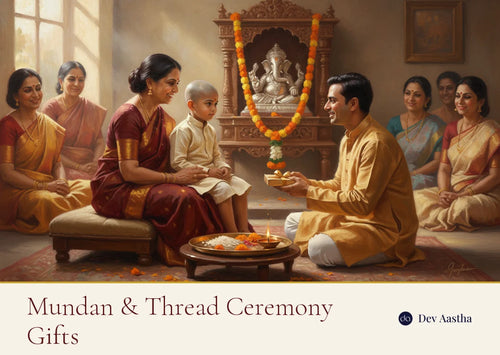
Weddings. A Lakshmi Ganesh pair is the safest premium choice in India, because it blesses both prosperity and beginnings and suits any household. Budget ₹5,000 to ₹15,000 for close family. Give it before the wedding if you can, so it can be placed during the griha pravesh of the new home.
Griha pravesh and housewarming. A Kubera, Lakshmi or Kamdhenu piece for the mandir, or a vastu article such as a kalash or a pair of horses for the living room. ₹3,000 to ₹8,000 covers a piece with real presence.
Milestone anniversaries. The 25th and 50th carry a silver and gold association in India, so a silver-toned devotional piece lands perfectly. Choose the deity the couple already worships rather than introducing a new one.
Diwali and festival gifting. Lakshmi, Ganesha and kalash pieces dominate for good reason. Buy in September if you want the better pieces, because the premium sizes sell out first in October.
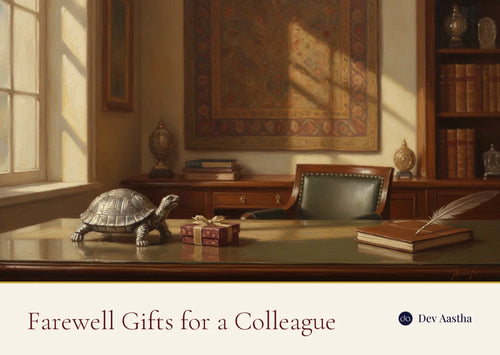
Retirement and farewells. Something for the home rather than the desk, since the desk is what they are leaving. A Hanuman or Balaji piece reads as a blessing for the next chapter.
Temple donation or a family deity. This is the one case where weight genuinely matters, because the piece may be formally offered. Speak to the temple before buying.
Across all of these, the pieces that move fastest at the premium end are the larger idols in our best sellers, which is a useful signal of what Indian households actually keep rather than what looks good in a catalogue.
Occasion sets the scale. The recipient sets the character.
Choosing by recipient, including the person who has everything
Match the piece to how the recipient actually lives with it: daily puja, display, or a desk they sit at for nine hours. That single question narrows the choice faster than any list of Hindu religious gift ideas can.
- Parents and in-laws: they almost certainly have a mandir and a settled routine. Buy for that mandir. Ask, discreetly, which deity they do puja to daily, and buy that one at a size their shelf can hold.
- A newly married couple: they are building a mandir from nothing. A coordinated Lakshmi Ganesh set is more useful to them than one impressive standalone piece.
- A boss or a senior client: choose something that works on a large desk or a reception console. Horses for momentum, a tortoise for stability, Ganesha for a new venture.
- A devout friend: the easiest recipient, because you already know their ishta devata. Spend on size and detail, not on novelty.
- Someone who has everything: go for an unusual form rather than an unusual budget. A Panchmukhi Hanuman, a Virat Roop shankh or a Shiv Parivar composition will be new to most collections.
- A younger relative in a rented flat: think smaller and lighter. They will move house two or three more times before they settle.
A note on gifting to non-Hindu friends and colleagues. Devotional imagery is a personal thing, and a large idol placed in someone's home is an obligation as much as a gift. A decorative vastu piece such as a horse, a tortoise or a kalash carries the same auspicious intent without asking anything of them.
For a 7 inch piece with real presence, something like this handcrafted silver-plated Hanuman idol shows what the top of the plated range looks like in practice.

Recipient settled, the last piece of the decision is which form to buy.
Which deity to choose, and when not to gift an idol at all
Choose the deity by what the moment needs: Ganesha for beginnings, Lakshmi for prosperity, Hanuman for protection and courage, Saraswati for study and craft. If you are unsure, Ganesha is the one form that is welcome at almost every threshold.
A short guide to the common choices:
- Ganesha: new home, new business, new marriage, exams, any first step. Placed near the entrance or at the front of the mandir.
- Lakshmi, or Lakshmi with Ganesha: Diwali, weddings, prosperity wishes. The two-idol set is the default premium gift in most of India.
- Hanuman: protection, strength through a hard phase, a new venture that needs nerve. Often placed facing the main door.
- Balaji or Venkateswara: deeply personal to South Indian households and increasingly popular nationally. Check before assuming.
- Buddha: not a puja idol for most Hindu households, but excellent as a calm decorative piece for a living room or office.
- Vastu forms: horses for success and momentum, tortoise for stability, Kamdhenu for abundance, lovebirds for harmony. These need no religious alignment at all.
Now the part most gift guides skip. There are times when an idol is the wrong gift.
- When the recipient has no mandir and no interest in one. The piece becomes clutter they feel guilty about moving.
- During a period of mourning. Devotional gifts during the mourning period are generally avoided. Wait.
- When you do not know their tradition. A Jain, Sikh, Muslim or Christian colleague may have specific views, and the safe choice is a decorative piece.
- When the piece is damaged or chipped, even slightly. A broken idol is considered inauspicious to gift and to keep.
Our guide to what not to gift in Indian culture covers the wider etiquette, including the regional variations that catch people out.
One category deserves its own section, because the rules genuinely change.
Premium corporate gifts with a spiritual meaning
Premium corporate gifts in the devotional category work best when they are auspicious rather than religious, sized for a desk or reception area, and kept below the tax thresholds that turn a gift into a taxable perquisite. Vastu pieces do this better than deity idols.
Three reasons vastu forms win in an office setting:
- They are religiously neutral. A horse, a tortoise or a kalash carries auspicious intent without asking anything about the recipient's faith.
- They suit the space. A running horse on a director's console reads as ambition. A deity idol on the same console reads as a private devotion made public.
- They photograph well for the brand. If the gift sits in a reception area, it is seen by every visitor for years.
On budgets, the premium tier for leadership and key clients in India sits around ₹5,000 to ₹15,000 per piece, with ₹2,000 to ₹5,000 for senior managers. Bulk orders of larger pieces need six to eight weeks of lead time before Diwali, not two.
There is also a tax dimension that many teams discover too late. Gifts to employees above ₹5,000 in a financial year are treated as a perquisite and taxed in their hands, and input tax credit rules on business gifts are their own subject. Our pillar guide to corporate gifts in India, budgets and tax rules works through that properly.
For larger statement pieces intended for a cabin or a reception desk, the corporate gifts collection is sized for exactly that use.

Whatever you choose, the handover is what people remember.
Presentation, timing and the handover
Give a devotional gift wrapped, in person, at a calm moment, and let the recipient open it in front of you. A premium piece handed over in a courier bag at the door loses most of what you paid for.
The details that matter, in order:
- Keep it in its box. A velvet-lined box is part of the gift. Rewrapping a piece in gift paper without the box is a downgrade, not an upgrade.
- Add a red or maroon cloth if you want a traditional touch. Many families place the idol on one before the first puja.
- Avoid black wrapping. It is widely read as inauspicious for a devotional gift.
- Time it to the occasion, not to your calendar. For a housewarming, give it on or just before the griha pravesh so it can be part of the first puja.
- Say what it is and why you chose it. Two sentences. "This is Hanuman, for the new office. I wanted you to have something for the entrance."
On muhurat: many families prefer to receive and install devotional items on an auspicious day. Friday is traditionally associated with Lakshmi, Tuesday and Saturday with Hanuman. If the recipient is particular about such things, ask rather than guess.
Skip personalisation on the idol itself. Engraving a name or a date onto a deity figure is considered disrespectful by many households. Put the message on the card instead.
After the handover, the piece has to survive years of daily life.
Caring for a premium piece so it stays premium
Silver-plated and silver pieces need a dry wipe after use, no water, no acidic cleaners, and a soft cloth rather than anything abrasive. That is nearly the whole of it, and it is worth passing on to the recipient.
Practical care notes for a mandir piece:
- Wipe with a dry, soft cotton cloth after aarti. Diya smoke and camphor residue are what dull the surface, not time.
- Keep water and milk off the surface. For abhishek, use a small dedicated idol rather than the display piece.
- Never use toothpaste, lemon, vinegar or metal polish on a plated surface. They strip the plating permanently.
- Keep sindoor and kumkum off the finish. They stain, and the stain sets.
- Store in the original box when the piece is not on display, with the tissue or foam it came with.
Sterling silver behaves differently. It tarnishes naturally and is meant to be polished, so a proper silver cloth is the right tool there. Plated pieces should never be polished in the same way.
A small honest point about longevity. Plating is a surface. Treated well, a good plated piece holds its lustre for many years of daily puja. Scrubbed with an abrasive, it will not survive one cleaning.
All of which assumes a premium gift is the right idea in the first place, and sometimes it is not.
When a premium gift is the wrong call
Skip the premium tier when the gift would embarrass the receiver, obligate them to reciprocate, or simply not fit the space they live in. Judgement here is worth more than budget.
Four situations where a smaller gift is the better one:
- When the relationship is not that close. A ₹10,000 gift from a distant cousin or a new colleague creates discomfort, not warmth. Indian reciprocity norms are real, and a large gift quietly hands the receiver a bill.
- When they live in a small rented flat. A 10 inch statement piece is a storage problem for someone who moves every eleven months.
- When the group is gifting together. Out-spending the pooled gift makes everyone else's contribution look thin.
- When you have not asked and cannot ask. An expensive idol of the wrong deity is an expensive mistake. A vastu piece or a collection of smaller things is safer.
There is a version of this that people rarely admit. A very expensive gift sometimes says more about the giver than the receiver. If you find yourself choosing a price point before you have chosen a piece, that is the signal to slow down.
The better instinct is the one that runs through all good Indian gifting: buy something the person will use, at a level that keeps the relationship comfortable, and present it properly. Genuine craftsmanship at ₹4,000, chosen for them specifically, beats ₹40,000 chosen in a hurry.
Frequently asked questions
What are the best premium religious gifts in India?
The most reliable premium choices are a Lakshmi Ganesh idol set for weddings and Diwali, a large Hanuman or Balaji idol for protection and new beginnings, and a vastu piece such as a horse, kalash or Kamdhenu for a housewarming. In the ₹3,000 to ₹10,000 band you can buy real size and hand-finished detail, which is what makes a devotional gift feel premium in the hand.
What to gift a religious person?
Gift for their existing practice rather than introducing something new. Find out which deity they do puja to daily and buy that form at a size their mandir can hold, or choose a puja accessory such as a kalash or a diya stand. Avoid anything that needs them to rearrange their mandir to accommodate it.
Which idol is good for gifting?
Ganesha and the Lakshmi Ganesh pair are the safest idols to gift in India, since they suit almost every household and every beginning. Hanuman works for protection and new ventures, and Kamdhenu for prosperity at a housewarming. Avoid gifting fierce or tantric forms, and avoid any idol that is chipped or damaged.
Can we gift a silver Ganesh idol to someone?
Yes. A silver or silver-plated Ganesha is one of the most auspicious gifts in Indian tradition, associated with new beginnings and with Lakshmi's blessing through the metal itself. Give it wrapped and in person, avoid black wrapping, and make sure the piece is undamaged. Many families like to receive it on a Wednesday or during a festival.
Are silver-plated idols worth buying as a premium gift?
Yes, if you want size and detail rather than metal value. Pure silver plating over a resin core gives you the silver lustre and crisp handcrafted detailing of a large piece without the cost of solid silver, which is why most 6 to 10 inch gifting idols in India are plated. Buy sterling instead only if the recipient specifically wants hallmarked metal they can weigh.
Shaadi ya griha pravesh par premium gift mein kitna kharch karna chahiye?
Close family ke liye ₹5,000 se ₹15,000 ka premium piece theek rehta hai, aur normal griha pravesh ke liye ₹3,000 se ₹8,000 kaafi hai. Yaad rakhiye, gift occasion ke hisaab se hona chahiye, apni capacity ke hisaab se nahin. Bahut bada gift dene se host ko wapas dene ka pressure mehsoos hota hai.
Is a silver idol a good investment as well as a gift?
Only if it is hallmarked sterling or 999 silver sold by weight, in which case it holds metal value minus the making charge. Silver-plated pieces are not an investment and should not be bought as one. They are bought for how they look in a mandir, which is a perfectly good reason on its own.
Explore more
Related guides: Corporate gifts in India: budgets and tax rules · Spiritual and silver gifts under ₹500, ₹1,000 and ₹2,000 · Silver gift items for every occasion in India
Shop the collection: God idols for home · Wedding gifts
Featured pieces: Silver-Plated Standing Horse Statue · Shiv Parivar Shivling Silver-Plated Idol
Keep reading
More from the journal