lakshmi ganesh saraswati sitting position
Lakshmi Ganesh Saraswati Sitting Position: The Correct Order and Vastu Placement
Sep 26, 2026


The main door is where energy enters your home, so the right vastu items home entrance seekers ask about quietly shape the mood of every room inside. The pieces Vastu trusts most are a swastik, a fresh toran, a Ganesha idol, an auspicious nameplate, and Lakshmi charan (the goddess's footprints) at the threshold.
Get those few things right, and your entrance starts working for you the moment anyone steps in. This guide covers each item, where it goes, the direction that suits it, and the small mistakes that quietly turn good energy away.
You will also find a quick placement chart, honest material advice, and remedies for a tricky doorway. Browse a ready selection in our Vastu items collection as you read.
The most recommended vastu items home entrance lists name are a swastik on the door, a toran above it, a Ganesha idol beside it, a clean nameplate, and Lakshmi charan at the threshold. Together they invite wealth, remove obstacles, and keep negativity out.
Think of it as a simple welcome committee. The toran greets, Ganesha clears the path, Lakshmi's footprints walk prosperity in, the swastik blesses, and the nameplate gives the home a clear identity for good energy to find.
Most online guides stop at which way the door should face. This one covers the actual objects too, because the door direction and the items on it work as one system, not two.
Vastu Shastra gives the main door a special name, the mukhya dwar. Of all the openings in a house, this one is thought to pull in the biggest share of incoming energy. That is why tradition pays it so much attention.
A welcoming, well-kept entrance is thought to invite Lakshmi, the goddess of wealth. A dark or cluttered one quietly blocks her. The idea is simple and human. The first impression a space gives sets the tone for everything behind it.
This is also why good home entrance decor is never only about looks. Each traditional piece carries a purpose, from protection to prosperity, layered on top of its beauty.
Before you add a single item, the foundation is direction. Let us settle that first.
Where should the entrance face? Under main door vastu, three facings stand out as favourable: North, East and the North-East corner. Each is tied to prosperity, fresh starts and steady growth, and each welcomes gentle morning sun into your rooms.
A North-West door is generally workable. The directions to treat with care are the South and especially the South-West, which Vastu links to heavier, draining energy. A South-West entrance is not a disaster, but it benefits from the remedies later in this guide.
Here is the quick read on each facing:
You often cannot change which way your flat faces. The good news is that the items below are precisely how Vastu strengthens whatever direction you already have.
The vastu items home entrance setups rely on fall into five core pieces plus a few helpful extras. Each one has a job, a place, and a direction that suits it best.

A swastik is the single most common protective symbol at an Indian doorway, drawn or fixed on or beside the main door to invite good fortune and ward off negativity. It represents auspiciousness and is closely tied to Lord Ganesha.
Fix a swastik for main door protection roughly at eye level, upright and wiped clean. A common pairing adds the words Shubh Labh, which together mean auspiciousness and gain, set one on either side of the frame.
Metal swastik plaques last far longer than stickers and look more intentional. Keep the arms of the symbol straight and never inverted, since a tidy, correct swastik is the whole point.
A toran (you may know it as a bandhanwar) is the garland-like hanging that runs along the top of a doorway. The classic version ties together mango leaves and marigold flowers, and tradition says it screens the energy coming in while inviting good fortune to settle.
Fresh leaves are ideal for festivals and pujas. For daily use, a reusable toran in beads, metal or fabric keeps the doorway dressed without wilting. The point is a doorway that always looks cared for.
Hang the toran so it frames the door neatly, without drooping into the walkway. A toran that catches on people's heads as they enter is doing the opposite of welcoming them.
Placing a ganesha idol for home entrance blessings is a classic choice, since Ganesha is Vighnaharta, the remover of obstacles. A seated Ganesha near the door clears the path for everyone who walks in.
The key rule is the idol must face into the home, not out. If you also want a Ganesha visible from outside, Vastu suggests placing two idols back to back, so one looks in and one looks out, and neither has its back to the family.
A small silver-plated Ganesha idol on a console table beside the door works beautifully for this, set on a clean, raised surface rather than on the floor. For the deeper direction rules, see our guide to Ganesha idol direction as per Vastu.
A nameplate gives your home a clear identity, which Vastu sees as essential for good energy to recognise and enter it. A faded or missing nameplate is thought to leave a home harder for prosperity to find.
For correct nameplate vastu, fix it on the wall to the right of the door as you face it from outside, at a comfortable height, well lit and free of rust or chips. Metal and wood are both considered favourable materials.
Keep the lettering legible and the plate spotless. A small light above it does double duty, brightening the entrance and honouring the idea that a named, lit doorway is a welcoming one.
Lakshmi charan are the small footprints of Goddess Lakshmi, placed at the entrance so prosperity is symbolically walking into your home. They are among the most loved vastu items home entrance traditions, especially around Diwali.
The direction is everything here. The footprints must point inward, toward the inside of the house, so the goddess is shown entering and never leaving. Footprints facing out are considered inauspicious.
A pair of silver-plated Lakshmi charan at the threshold, refreshed and cleaned regularly, keeps the symbolism alive year round, not just at festival time. For the full placement rules, including which way the footprints point and where they go beyond the doorway, see our guide to where to place Lakshmi charan paduka at home.
An evil eye for home protection, called nazar battu, is hung at or near the entrance to absorb the negative gaze and jealous energy that visitors can carry, often without meaning to. It is one of the simplest guardians you can add.
A brass Trishakti, combining the trishul, swastik and Om, serves a similar protective purpose on the main door. Both are small, inexpensive, and easy to fix without dominating the look of the entrance.
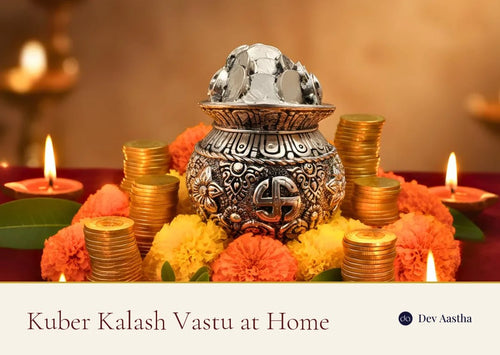
Wealth-drawing pieces near the entrance reinforce the prosperity theme. A Kuber kalash, named for the treasurer of the gods, and a Shubh Labh hanging both signal abundance entering the home.

A silver-plated Shubh Labh door hanging sits on or beside the door frame and pairs naturally with a swastik. Keep these in the North or North-East zone where wealth energy is strongest.
Beyond fixed objects, three daily touches lift any entrance. A lit diya or lamp at dusk, a fresh rangoli on the floor, and a healthy plant near the door each carry their own quiet blessing.
For greenery, choose a tulsi, money plant or another lush, well-kept plant. Avoid thorny plants like cactus at the entrance, as Vastu links thorns to friction. A tidy, green, glowing doorstep is the easiest upgrade of all.
Use this chart as a fast reference for where each item goes and why. It pulls the whole system into one view.
| Item | Where it goes | Best zone | Purpose |
|---|---|---|---|
| Swastik | On or beside the door, eye level | Any door | Auspiciousness, protection |
| Toran | Across the top of the door frame | Any door | Welcomes prosperity, filters energy |
| Ganesha idol | Console beside the door, facing in | North, East | Removes obstacles |
| Nameplate | Wall, right of the door, well lit | North, East | Identity, recognition |
| Lakshmi charan | Threshold, footprints facing in | Any door | Invites wealth |
| Evil eye / Trishakti | At or near the door | Any door | Guards against negativity |
| Kuber kalash / Shubh Labh | Beside the door or in the lobby | North, North-East | Draws abundance |
| Diya, rangoli, plant | Threshold and floor | Any door | Light, beauty, living energy |
Even the best items lose their effect if the basics around them are wrong. These habits matter as much as the objects themselves.
Fix these, and the items you have placed can finally do their quiet work without anything pulling against them.
If your door faces South or South-West, or opens onto a wall, staircase or another flat's door, you are not stuck. Vastu offers gentle remedies that strengthen a difficult entrance without renovation.
For a South or South-West facing door, these help most:
If a staircase or lift faces your door, a toran and a small mirror placed thoughtfully on a side wall, never directly opposite the door, can soften the rush of energy. When in doubt, more light and more cleanliness rarely go wrong.
For homes that share a corridor, a distinctive nameplate and your own swastik help mark your space as separate and cared for.
The material of your entrance pieces affects both their feel and how long they last. There is no single right answer, only what suits your door, your budget, and how much upkeep you want.
At Dev Aastha, our entrance pieces are pure silver plating over a resin core, handcrafted and hand-finished for fine detail. You get genuine silver shine and lasting craftsmanship, without the cost of solid silver. That is why silver-plated idols suit a doorway you want to look elegant every day.
Whatever you choose, match it to your door and keep it clean. A well-maintained brass swastik beats a neglected silver one, every time.
Arranging the right vastu items home entrance traditions favour is a small, loving act with real meaning behind it. Start with direction, add the core five, keep everything facing in, and let light and cleanliness do the rest.
You do not need every object at once. A clean swastik, a fresh toran, a Ganesha facing inward, and footprints walking prosperity in will already transform how your doorway feels.
Add pieces as you go, keep them cared for, and your entrance becomes exactly what Vastu intends: a warm, bright welcome for everyone, and every blessing, that arrives.
What are the best vastu items home entrance buyers should start with?
Start with five core pieces: a swastik on the door, a toran above it, a Ganesha idol facing inward beside it, a clean nameplate, and Lakshmi charan at the threshold pointing into the home. These cover protection, prosperity and obstacle-removal, which is most of what an entrance needs. Add an evil eye and a wealth symbol like a Kuber kalash as you go.
Which direction should the main door face as per Vastu?
As per main door vastu, North, East and North-East are the most auspicious directions for a main entrance, linked to wealth, fresh energy and spiritual growth. West and North-West are acceptable. A South or South-West door is best supported with remedies like a swastik, a wind chime and an inward-facing Ganesha, plus extra light and cleanliness.
Where should Lakshmi charan footprints face at the entrance?
Lakshmi charan should always face inward, toward the inside of your home, so the goddess of wealth is shown walking in rather than out. Place the footprints at or just inside the threshold and keep them clean. Footprints pointing outward are considered inauspicious, as they suggest prosperity leaving the house.
Can I place a Ganesha idol facing outside the main door?
A single Ganesha idol should face into the home, not outward. If you want a Ganesha visible from outside too, Vastu suggests placing two idols back to back, so one faces in and one faces out and neither turns its back to the family. Keep the idol on a clean, raised surface beside the door, never on the floor.
Is an evil eye really useful for home protection?
An evil eye, or nazar battu, is a traditional vastu item used at the entrance to absorb negative or jealous energy that visitors may carry. Many households hang one at the door for peace of mind. It is inexpensive and easy to place, and it pairs well with a swastik or a brass Trishakti for layered protection.
Ghar ke mukhya dwar par kaun se vastu item lagane chahiye?
Ghar ke mukhya dwar par swastik, toran (bandhanwar), andar ki or mukh kiye Ganesh ji, ek saaf nameplate, aur dehleez par andar ki or mudi Lakshmi charan lagana shubh maana jaata hai. Saath mein nazar battu aur Kuber kalash bhi rakh sakte hain. Dwar ko hamesha saaf, roshan aur khula rakhein taaki sukh-samriddhi ghar mein aaye.
Related guides: Ganesha idol direction as per Vastu · Lakshmi idol direction and placement · The significance of the kalash and nariyal · Hanuman idol for entrance protection · Elephant statue direction and trunk meaning · Vastu Shastra for home: rules and best practices
Shop the collections: Vastu items · Home decor

Keep reading