

925, 999 and BIS Hallmark: What the Numbers on Silver Actually Mean

Last updated 16 October 2026 · By Arun Mehta
If you have ever turned over a silver coin, a puja thali or a piece of jewellery and found a tiny 925 stamped into the metal, you have met a purity mark. The 925 silver meaning is simple once you know the code: it says the item is 92.5% pure silver.
Those small numbers, and the BIS hallmark that sometimes sits beside them, are how India certifies what a solid silver article is actually made of. This guide explains every number you will see and what the silver hallmark stamp really proves.
It also covers something most jewellery blogs skip: why a silver-plated idol follows a completely different rulebook. Understanding this protects your money at the counter and, at Dev Aastha, it is the honesty we build our craftsmanship on.
Key takeaways
- 925 = 92.5% pure silver (sterling silver). The other 7.5% is usually copper, added for strength.
- 999 is nearly pure silver (99.9%), soft and used for coins and bars rather than everyday wear.
- The BIS hallmark is India's official purity certificate, now carrying the word SILVER, a purity grade and a 6-digit HUID code.
- Silver hallmarking is currently voluntary in India, though the government is moving to make it mandatory.
- A silver-plated idol has no hallmark by design. It is a thin layer of pure silver over a resin form, judged by finish and craft, not by a purity stamp.
On this page
- What does 925 mean on silver?
- 925 vs 999 vs 990: the silver purity numbers explained
- What is the BIS hallmark on silver, and what are its parts?
- Is silver hallmarking mandatory in India?
- How to read the stamp and check your silver is real
- Do silver-plated idols and gifts carry a hallmark?
- What to look for when buying silver for puja or gifting
- Frequently asked questions
What does 925 mean on silver?
925 on silver means the metal is 92.5% pure silver. This is the global standard known as sterling silver. The number is a measure of fineness, written in parts per thousand, so 925 is 925 parts silver out of 1,000.
The remaining 7.5% is almost always copper. Pure silver on its own is very soft and bends easily, so a little copper is mixed in to make the piece strong enough for daily use. That is why rings, chains, cutlery and puja articles are so often made in sterling rather than in pure silver.
So when you ask what does 925 mean on silver, the honest answer is that it is a quality guarantee, not a flaw. Sterling gives you the shine and value of real silver with the durability a used object needs. The 925 silver meaning is the same whether it is stamped on a bracelet in Jaipur or a spoon in London.
925 vs 999 vs 990: the silver purity numbers explained
The higher the number, the purer the silver, but purer is not always better. Softer, high-purity silver dents more easily, so each grade has a job it suits best. India's revised standard (IS 2112:2025) recognises seven grades of silver.
Here is what the common stamps tell you at a glance:
| Stamp | Purity | Common name | Best suited to |
|---|---|---|---|
| 999 | 99.9% silver | Fine silver | Coins, bars, investment pieces |
| 990 | 99.0% silver | Fine silver | Coins, religious articles |
| 970 | 97.0% silver | - | Articles, utensils |
| 958 | 95.8% silver | Britannia silver | Premium tableware |
| 925 | 92.5% silver | Sterling silver | Jewellery, cutlery, daily use |
| 835 | 83.5% silver | - | Older or imported pieces |
| 800 | 80.0% silver | - | Heavily worked items |
The 999 silver meaning is simply 99.9% purity, the highest grade in everyday use. It is prized for coins and Lakshmi or Ganesh silver notes bought on Dhanteras, where purity matters more than hardness. Because it is so soft, it is a poor choice for a ring you wear daily.
For most jewellery and puja items you will handle often, 925 sterling is the sweet spot: pure enough to hold value, hard enough to last. If you want a deeper look at how purity affects idols specifically, our guide on silver-plated vs pure silver idols walks through the real trade-offs.
What is the BIS hallmark on silver, and what are its parts?
The BIS hallmark is India's official mark certifying that a silver article's purity has been independently tested. BIS stands for the Bureau of Indian Standards, the national body that runs the scheme. A number stamped by the maker is a claim; a BIS hallmark is a verified certificate.
Under the 2025 revision, a hallmarked silver piece carries three parts:
- The BIS Standard Mark with the word SILVER - the triangular BIS logo that shows the item passed assay testing.
- The purity grade - one of the seven fineness numbers, such as 925 or 999.
- A 6-digit HUID code - a unique alphanumeric ID that ties that exact piece to its testing record.
HUID stands for Hallmarking Unique Identification. It is the same traceability system already used for gold, now extended to silver. Each code lets you trace the article type, purity, hallmarking date, the testing centre and the registered jeweller.
In short, the silver hallmark is not decoration. It is a small audit trail stamped into the metal, and it is your strongest proof of purity when you buy solid silver.
Is silver hallmarking mandatory in India?
As of October 2026, silver hallmarking is voluntary in India, not yet mandatory. Gold hallmarking became compulsory in stages, but silver has lagged behind because the market is far more varied.
A HUID-based voluntary scheme for silver jewellery and articles began on 1 September 2025. The government has said it is working towards making silver hallmarking mandatory, and reports through 2026 point to that shift arriving soon, though BIS is still studying how to roll it out fairly.
Why the caution? Silver is not just jewellery. It covers coins, utensils, lamps, idols and even furniture, sold through both big showrooms and tiny local workshops. Testing every category at scale is harder than it was for gold. Because this rule is changing, always check the current status on the BIS website or the BIS Care app before a large solid-silver purchase.
How to read the stamp and check your silver is real
Start with the stamp, then confirm it independently. A genuine BIS hallmark is your fastest signal, and the BIS Care app lets you type in the 6-digit HUID to confirm the piece was really tested and registered.

If a solid silver item has no stamp at all, treat the purity as unproven. Beyond the mark, a few simple checks help:
- The magnet test: real silver is not magnetic. If a magnet sticks firmly, the core is another metal.
- The ice test: silver conducts heat fast, so an ice cube placed on solid silver melts noticeably quicker than on steel.
- The smell and sound: pure silver has no metallic odour, and a solid silver coin gives a clear, ringing note when tapped.
These home checks are useful hints, not lab proof. For anything valuable, a BIS hallmark and the app check beat every trick. To understand why the metal matters so much in worship, our note on why silver is used in puja gives the tradition behind the shine.
Do silver-plated idols and gifts carry a hallmark?
No, and that is exactly as it should be. A hallmark certifies the purity of solid silver. A silver-plated idol is a different category: a layer of pure silver plating bonded over a detailed resin form, so there is no block of solid silver to assay or stamp.
This matters because the numbers game does not apply to plated decor. You do not judge a silver-plated Ganesha by a 925 mark it will never carry. You judge it by the quality of the plating, the crispness of the hand-finished detail and how well the piece holds its gleam over the years.

This is the honest promise behind our silver-plated idols: the warm silver lustre of a devotional piece without the cost, softness or tarnish-risk of a solid silver murti. A set like the silver-plated Lakshmi Ganesha set is made for your mandir and for gifting, not for a bullion drawer.
Anyone who stamps a resin-core idol with a solid-silver hallmark is misleading you. At Dev Aastha we never call plated pieces solid silver, and we never fake a purity mark. The craftsmanship speaks for the price, and the honesty is the point.
What to look for when buying silver for puja or gifting
Match the proof to the product. What you check depends entirely on whether you are buying solid silver or silver-plated decor, and confusing the two is where buyers lose money.
For solid silver coins, kalash, thali or jewellery:
- Look for a BIS hallmark with the word SILVER, a purity grade and a HUID code.
- Prefer 999 for coins and investment pieces, and 925 sterling for items you will handle daily.
- Verify the HUID in the BIS Care app, and ask for a bill that states the purity and weight.
For silver-plated idols, gift sets and home decor:
- Do not expect a hallmark; expect honesty about the plating instead.
- Judge the finish: even, bright plating with no dull patches, and sharp hand-finished detailing.
- Check for protective gift packaging and clear care guidance, since good plating lasts for years with gentle cleaning.
Dhanteras is when both worlds meet on one shopping list, a solid silver coin for the puja and a beautiful plated idol for the mandir. Our guide to buying silver on Dhanteras helps you split that budget wisely, and our silver idol care guide keeps a plated piece gleaming long after the festival.
Frequently asked questions
Is 925 silver real silver?
Yes. 925 silver is 92.5% pure silver, mixed with about 7.5% copper for strength. It is real silver by every standard, which is why it is called sterling silver and used worldwide for quality jewellery and cutlery.
What is the difference between 925 and 999 silver?
925 is 92.5% pure and harder, so it suits jewellery and daily-use items. 999 is 99.9% pure and very soft, so it suits coins and bars where purity matters more than durability. The 999 silver meaning is highest purity, not highest practicality.
Does a silver-plated idol have a 925 or BIS hallmark?
No. Hallmarks certify solid silver. A silver-plated idol is pure silver plating over a resin form, so it carries no purity stamp. Judge it by plating quality and craftsmanship, not by a number it cannot honestly bear.
Is silver hallmarking mandatory in India?
Not yet. As of October 2026 it is voluntary, under a HUID-based scheme that began in September 2025. The government is moving towards making it mandatory, so check the current BIS status before a big purchase.
chandi asli hai ya nahi kaise pata kare?
Sabse pehla sign BIS hallmark hai: SILVER word, purity grade aur 6-digit HUID. Ghar par magnet test (asli chandi magnetic nahi hoti) aur ice test madad karte hain, lekin solid silver ke liye hallmark aur BIS Care app sabse bharosemand hai.
What does 925 mean on silver jewellery I already own?
The 925 silver meaning here is that the piece is sterling silver, 92.5% pure. If it also has a BIS hallmark and HUID, its purity was independently tested. If it only has 925 with no hallmark, treat it as the maker's claim rather than certified proof.
Explore more
Related guides
- Silver-Plated vs Pure Silver Idols: An Honest Buyer's Guide
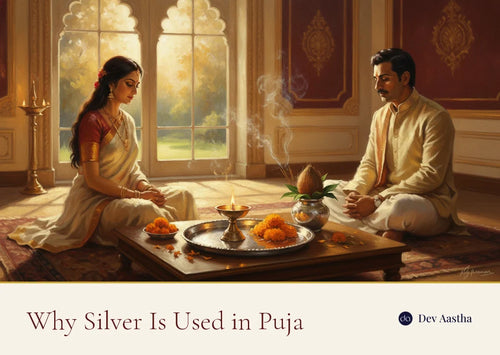
- Why Silver Is Used in Puja: Significance, Benefits & Tradition
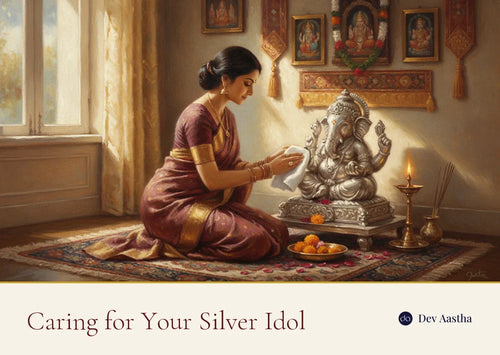
- How to Clean a Silver Idol at Home (Safe Care Guide)
Shop the collection
- Silver-Plated Idols - handcrafted devotional pieces with genuine silver lustre.
Featured pieces
About the author. Arun covers Hindu traditions, vastu and festivals for Dev Aastha, translating time-honoured practices into clear, practical guidance for modern Indian homes. His writing draws on scriptural sources and the lived traditions of devout households.
Sources: Bureau of Indian Standards (BIS) hallmarking scheme for silver and IS 2112:2025; BIS Care app. Hallmarking status reflects reports current to October 2026 and is subject to change; verify on the official BIS website before purchase.
Keep reading
More from the journal
Discussion
No comments yet
Share your thoughts or ask a question below.

