Why Silver Is Used in Puja: Significance, Benefits & Tradition

Last updated 17 September 2026 · 12 min read · By Arun Mehta, Deities & Tradition, Dev Aastha
If you have ever wondered why silver is used in puja, the short answer is that Hindu tradition treats silver as a pure, sattvic metal tied to the Moon, to Goddess Lakshmi, and to prosperity. Silver is believed to stay cool and calm, to carry devotional energy well, and to keep offerings pure.
That is why silver appears again and again in an Indian pooja room, in the thali, the diya, the kalash, coins, and idols. It is not decoration alone. Each piece carries a meaning that goes back centuries in scripture, in Vedic astrology, and in the daily habits of devout households.
This guide explains why silver is used in puja, one reason at a time, along with its real significance and benefits. It covers the Moon connection, the link to wealth and Dhanteras, why the kalash is silver, the metal's genuine practical qualities, and one honest point most silver sellers skip: whether the idol must be solid silver at all.
Key takeaways
- Silver is considered a pure, sattvic metal in Hindu tradition, believed to calm the mind and deepen devotion.
- In Vedic astrology silver is the metal of the Moon (Chandra), which stands for coolness, peace, and emotional balance.
- Silver is closely linked to Goddess Lakshmi, which is why buying silver on Dhanteras is thought to invite prosperity.
- Silver has natural antimicrobial properties, one practical reason it was traditionally used to hold water, milk, and charnamrit.
- Devotion matters more than metal weight. A quality silver-plated idol carries the same lustre and meaning at a far gentler cost than solid silver.
On this page
- Why is silver used in puja?
- Silver and the Moon: the Chandra connection
- Why silver is linked to Lakshmi, wealth and Dhanteras
- Why is a silver kalash used in puja?
- The real benefits of silver in worship
- Which silver items belong in a pooja room?
- Silver-plated or solid silver: does it matter for puja?
- How to choose and care for silver puja items
- Frequently asked questions
Why is silver used in puja?
Silver is used in puja because Hindu tradition sees it as one of the purest and most auspicious metals, fit to hold offerings and to house the divine. It sits alongside gold, copper, and brass as a sacred metal, each with its own role, and silver is prized for its cool, calming, sattvic nature.
The full answer to why silver is used in puja brings together spiritual meaning and real physical qualities. The importance of silver in Hindu puja rests on four threads:
- Purity. Silver is seen as clean and untainted, so it is felt to be worthy of the gods. Offering on silver signals a pure intention.
- The Moon. In jyotish, silver is the metal of Chandra, the Moon, tied to peace and a steady mind.
- Prosperity. Silver is a form of wealth and is linked to Lakshmi, so it welcomes abundance into the home.
- Real qualities. Silver is naturally antimicrobial and cool to the touch, which made it practical for water, milk, and prasad long before science explained why.

Put simply, silver is chosen for both its meaning and its usefulness. The rest of this guide takes each thread and shows where it came from, so you understand not just that silver is auspicious, but exactly why. We begin with the oldest link of all, the Moon.
Silver and the Moon: the Chandra connection
Silver is the metal of the Moon. In Vedic astrology each planet rules a metal, and Chandra, the Moon, rules silver, which is why the two share the same cool, bright, reflective quality. This single link explains much of silver's calming reputation in worship.
The Moon in Hindu thought governs the mind, the emotions, and inner peace. Its energy is described as sheetal, meaning cooling and soothing. Because silver carries that same lunar quality, it is believed to settle a restless mind and create the calm that real devotion needs.
This is also why silver is called a sattvic metal. In the three-guna framework of Indian philosophy, sattva is the quality of purity, clarity, and balance. Metals, foods, and habits can all lean sattvic, and silver is felt to support that clear, peaceful state a worshipper wants to reach before praying.
You can see the belief in everyday customs. Silver anklets and payal on babies, a silver glass for drinking water, a silver coin tucked into a new home, all draw on the same idea that the Moon's cool metal steadies and protects. In the pooja room, that calming presence is exactly what invites focus. From peace of mind, the tradition moves naturally to peace of home, and there silver meets Lakshmi.
Why silver is linked to Lakshmi, wealth and Dhanteras
Silver is linked to Lakshmi because it is itself a form of wealth, and Lakshmi is the goddess of wealth and abundance. Bringing silver into the home is felt to please her and to invite prosperity, which is why silver idols, coins, and vessels are so common in Lakshmi puja.
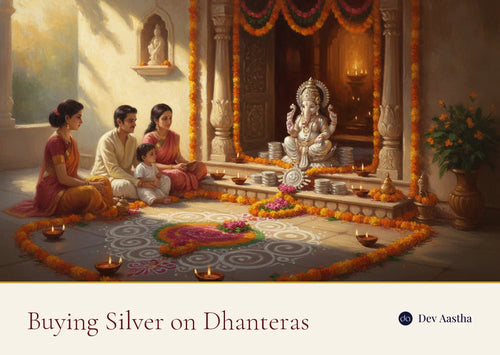
This connection peaks at Dhanteras, two days before Diwali. Dhanteras marks the day when buying precious metal is considered especially shubh, and silver is the most popular choice for families who want an auspicious purchase without the cost of gold. A new silver coin, diya, or idol bought that day is a blessing you keep.
The pairing runs deep in imagery too. Lakshmi is shown with gold coins flowing from her hands, and silver, as the moon-bright cousin of gold, shares that promise of plenty. A Lakshmi puja on Diwali often centres on a silver or silver-plated idol for exactly this reason.
If you plan to buy silver this Dhanteras, it helps to know what actually matters and what is only sales talk. Our honest guide to buying silver on Dhanteras walks through it. The wealth link is powerful, but silver's role in the kalash shows a different and older kind of meaning.
Why is a silver kalash used in puja?
A silver kalash is used in puja because the kalash represents the source of life and creation, and silver is felt to keep the water and energy it holds pure. Filled with water, topped with mango leaves and a coconut, the kalash becomes a seat for the divine during almost every major ritual.
In scripture the kalash is described as holding sacred water and positive vibrations, sometimes called the womb of creation. The vessel stands for the universe itself, the water for the life within it. Making that vessel of silver, a pure and sattvic metal, is believed to protect and lift the energy it carries.

The same thinking explains the silver vessel used for charnamrit, the sacred water offered to devotees. Charnamrit is traditionally collected and served in a copper, brass, or silver pot, both for the metal's purity and for its practical effect on the water, which we come to next.
A small silver-plated kalash is a gentle way to bring this symbolism home without the price of solid silver. Beyond meaning, silver earns its place in the pooja room for reasons you can measure.
The real benefits of silver in worship
Beyond its symbolism, silver offers genuine practical benefits that our ancestors noticed long before modern science. The most important is that silver is naturally antimicrobial, so water and milk stored in it stay fresher, which is a real advantage for daily offerings.
This is not just folklore. Silver ions are known to slow the growth of many bacteria, an effect studied and used in medicine and water storage today. It is the practical reason a family would keep charnamrit, holy water, or milk in a silver vessel and trust it through a long puja.
Silver's other qualities support worship in quieter ways:
- It stays cool. Silver does not hold heat the way some metals do, which suits water offerings and a serene pooja space.
- It resists rust. Unlike iron, silver does not rust, so a well kept piece serves a family for generations.
- It reflects light beautifully. The bright silver gleam catches the flame of a diya, adding warmth and focus to aarti.
- It is durable. Silver and quality silver plating both last for years with gentle care, so an idol becomes a keepsake.
Tradition and usefulness rarely line up this neatly. Silver was chosen for its meaning, and it happened to be one of the most practical metals a home could own. Knowing this, the next question is simply which silver pieces are worth having.
Which silver items belong in a pooja room?
The most common silver items in a pooja room are the idol, the kalash, the diya, the puja thali, small bells and vessels, and silver coins. Each has a clear role, and most families build the collection slowly rather than all at once.
Here is what each piece is for:
| Silver item | Why it is used |
|---|---|
| Idol (murti) | The seat of the deity for daily darshan and worship. Lakshmi, Ganesha, and Krishna are popular. |
| Kalash | Holds sacred water and stands for creation. Central to sthapana in most rituals. |
| Diya | Carries the flame for aarti. Silver reflects the light and resists rust. |
| Puja thali | The plate that carries diya, roli, rice, and flowers during the ritual. |
| Coins | Bought on Dhanteras and kept for Lakshmi puja as a token of wealth. |
| Bell and vessels | The bell invites attention at aarti; small lotas hold water and charnamrit. |
You do not need every item to begin. A single silver-plated idol or a small kalash is enough, and most homes add a diya or thali over time, often on festivals or as gifts. The one honest question left is whether that silver has to be solid at all.
Silver-plated or solid silver: does it matter for puja?
For worship, a silver-plated idol is spiritually complete. Nothing in scripture says a deity must be housed in solid silver, and tradition places devotion and a pure heart far above the weight or price of the metal. What matters is that the piece is kept with care and respect.
This is worth saying plainly, because most silver sellers earn more from solid pieces and rarely mention it. The truth is simpler. A well made silver-plated idol carries the same bright pure silver plating, the same lustre, and the same meaning, at a fraction of the cost of solid silver.
The honest differences are practical, not spiritual:
- Cost. Solid silver is priced by weight and can run into lakhs for a large idol. A plated piece gives you the look for a small fraction.
- Care. Plating is a thin bright layer, so it needs gentle cleaning, never harsh polishes. Solid silver tolerates more.
- Detailing. Plating over a resin core allows fine, intricate hand-finished detail that heavy solid metal can make costly. Resin here simply means a moulded composite body, light and sturdy, which is then coated in real silver.
At Dev Aastha every idol is pure silver plating over a resin core, chosen so a modern family can own a genuinely beautiful piece without a jeweller's price. If you want the full comparison, our guide to silver-plated versus pure silver idols lays out how to tell them apart and what each is really worth. Once you have chosen, a little care keeps it glowing.
How to choose and care for silver puja items
Choose silver puja items by matching the piece to how you will use it, then keep them clean and dry so the shine lasts. A daily-use idol or diya asks for a bright, easy-care finish, while a festival piece can be more elaborate.
A few simple pointers help when you buy:
- Start with one meaningful piece. A Lakshmi or Ganesha idol, or a small kalash, anchors the pooja room. Add diyas and a thali later.
- Check the finish, not just the shape. Look for even, bright plating and crisp detailing in the face and folds, since that is where quality shows.
- Be clear on plated versus solid before you pay, so the price makes sense and your care routine is right.
- Buy on a shubh day like Dhanteras or Akshaya Tritiya if you want the added auspiciousness, but any day works for daily worship.
Care is where most silver is lost or saved. Silver darkens naturally over time as it reacts with air, and a plated piece needs a gentle hand. Wipe it with a soft dry cloth often, and use only mild soapy water for a deeper clean. Never use baking soda, lemon, foil, or toothpaste on plating, since those tricks are meant for solid metal and slowly strip the thin bright layer off a plated piece.
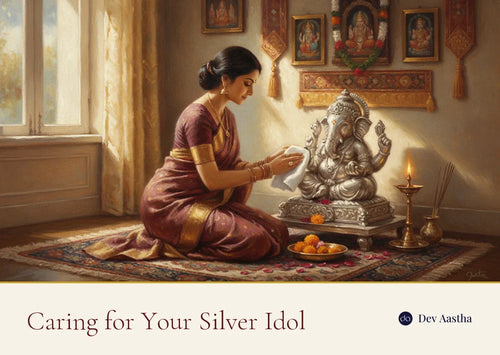
Our step-by-step guide to how to clean a silver idol at home sets out the safe method and the hacks to avoid.
Treated kindly, silver rewards you for decades. It is why a mother's puja thali so often passes to a daughter, still bright, still carrying the same quiet meaning it did on the first day. That is the real gift of silver in worship.
Frequently asked questions
Why is silver considered auspicious in Hindu puja?
Silver is considered auspicious because it is seen as a pure, sattvic metal linked to the Moon and to Goddess Lakshmi. Tradition holds that it calms the mind, carries devotional energy, and invites prosperity, so it is felt to be worthy of holding offerings and housing the divine.
Why is silver linked to the Moon?
In Vedic astrology each planet rules a metal, and Chandra, the Moon, rules silver. The two share a cool, bright, reflective quality, so silver is believed to carry the Moon's soothing energy, which governs the mind and the emotions. This is why silver is thought to bring calm and peace.
Why is a silver kalash used in puja?
The kalash represents the source of creation and holds the sacred water that seats the divine during a ritual. Silver is used because it is a pure, sattvic metal believed to protect and lift that energy, and its natural antimicrobial quality also helps keep the water fresh through a long puja.
Does a puja idol have to be solid silver?
No. Scripture places devotion above the metal, so a silver-plated idol is spiritually complete. A quality plated piece carries the same lustre and meaning as solid silver at a far gentler cost, which is why silver-plated idols are so widely used in Indian homes today.
What are the benefits of a silver Ganesh idol at home?
A silver Ganesh idol brings together two auspicious ideas: Ganesha as the remover of obstacles, worshipped first at every new beginning, and silver as the sattvic, moon-linked metal of calm and prosperity.
Tradition holds that keeping one in the pooja room invites a settled, obstacle-free start to whatever the family takes on, which is why a Ganesh idol is so often the first piece bought for a new mandir, a new home or a new business desk. At Diwali it is placed beside Lakshmi, since Ganesha is honoured before her in the puja.
Is silver really antibacterial, or is that just tradition?
It is both. Silver has genuine antimicrobial properties, since silver ions slow the growth of many bacteria, an effect used in medicine and water storage today. Our ancestors noticed water and milk stayed fresher in silver, which is one practical reason it became the metal of choice for offerings.
Puja mein chandi kyun istemal hoti hai? (Why is silver used in puja?)
Puja mein chandi isliye istemal hoti hai kyunki ise ek pavitra aur sattvic dhatu maana jaata hai, jo Chandrama aur Maa Lakshmi se judi hai. Maanyata hai ki chandi mann ko shaant karti hai, samriddhi laati hai, aur apne antibacterial gun ke kaaran jal aur doodh ko shuddh rakhti hai. Isiliye chandi ki thali, diya, kalash aur murti pooja ghar mein rakhi jaati hai.
Explore more
Related guides: Silver-plated vs pure silver idols · Buying silver on Dhanteras · How to set up a pooja room at home
Shop the collection: Pooja essentials · Silver-plated idols
Featured pieces: Silver-Plated Kalash Khazana · Lakshmi Silver-Plated Idol
Sources: Vedic astrology tradition on planetary metals (silver and Chandra); Puranic descriptions of the kalash as the vessel of creation; common Hindu pooja-room customs; established scientific understanding of silver's antimicrobial (oligodynamic) properties. Spiritual beliefs are presented as tradition, not as claims of guaranteed outcomes.
Keep reading
More from the journal