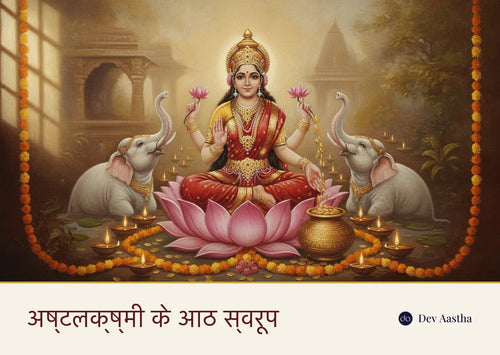

The Lakshmi Puja vidhi for Diwali is simpler than the long ritual lists make it look. At its heart it is one focused evening. You clean and light up your home, set Ganesha and Goddess Lakshmi on a fresh chowki, and do a short Ganesh puja first. Then you invite Lakshmi with a diya, flowers, sweets and a sincere prayer, and close with the aarti. No priest is needed for a warm, correct home puja.
This guide walks you through the whole Lakshmi Puja vidhi for a home. You get the Diwali 2026 date and Lakshmi Puja muhurat, the full samagri list, how to prepare your puja sthan, the step-by-step puja in order, the aarti and a simple mantra, plus the meaning behind each ritual. Take what fits your family and leave the rest.
Key takeaways
- The Lakshmi Puja vidhi has a clear order: prepare and light the home, worship Ganesha first, then invoke Lakshmi with diya, flowers and bhog, and end with the aarti.
- Diwali 2026 falls on Sunday, 8 November, with the Lakshmi Puja muhurat in the Pradosh Kaal evening window, roughly 6:29 PM to 8:29 PM for North India. See the 2026 Hindu festival and vrat calendar for the full sequence.
- Ganesha is always worshipped before Lakshmi, so that wisdom and auspicious beginnings come before wealth.
- Gather your Lakshmi Puja samagri a day ahead so the evening runs calm and unhurried.
- The single most important act is lighting diyas, and keeping at least one lit through the night to welcome the Goddess.
What is the Lakshmi Puja vidhi?
The Lakshmi Puja vidhi is the method of worshipping Goddess Lakshmi on Diwali night to invite wealth, well-being and good fortune into the home. Lakshmi is the goddess of prosperity, and Diwali is the one night of the year families across India welcome her with light.
The belief is simple and lovely. On the dark Amavasya night of Kartik, Lakshmi is said to walk the earth and step into homes that are clean, lit and ready for her. The rows of diyas, the rangoli at the door and the open windows are all an invitation.
The vidhi gives that welcome a shape. You worship Ganesha first for an auspicious start, then honour Lakshmi with the lamp, flowers and sweets, and many families add Kuber and Saraswati to the same chowki. Done with care, even a twenty-minute home puja carries the full spirit of the night. First, the date and muhurat to plan around.
Diwali 2026 date and Lakshmi Puja muhurat
Diwali 2026 falls on Sunday, 8 November, and the Lakshmi Puja muhurat is in the Pradosh Kaal, roughly 6:29 PM to 8:29 PM for Delhi and most of North India. The Kartik Amavasya tithi begins around 2:17 PM on 8 November and ends near 12:01 PM on 9 November. The main puja is kept on the evening of the 8th.
Diwali is a five-day festival. Here is how the days fall in 2026:
| Day | Date | Festival |
|---|---|---|
| 1 | Fri, 6 Nov | Dhanteras |
| 2 | Sat, 7 Nov | Choti Diwali (Narak Chaturdashi) |
| 3 | Sun, 8 Nov | Diwali and Lakshmi Puja |
| 4 | Mon, 9 Nov | Govardhan Puja (Annakut) |
| 5 | Tue, 10 Nov | Bhai Dooj |
The most auspicious window is the Pradosh Kaal, the period just after sunset, ideally overlapping the steady Vrishabha (Sthir) Lagna. Many families simply begin at dusk once the lamps are lit. The exact muhurat shifts by city, so confirm your local time with a panchang a day or two before.
If a business keeps its books, the Lakshmi Puja muhurat is also when the Chopda Pujan or bahi-khata puja is done, blessing the new account ledgers. With the timing fixed, gather your samagri next.
Lakshmi Puja samagri list
Gather your Lakshmi Puja samagri in one tray the day before, so nothing sends you to the market on Diwali evening. Most of it already lives in an Indian kitchen or on the mandir shelf.
Keep these ready for the puja:
- Idols of Lakshmi and Ganesha, placed side by side, with Ganesha on Lakshmi's left
- A kalash (lota) with water, a coin, a betel nut and a few mango leaves, topped with a coconut
- Diyas, cotton wicks and ghee or oil, plus extra diyas to light around the house
- Roli, kumkum, haldi, akshat (rice), and chandan (sandalwood paste)
- Fresh flowers, especially lotus and marigold, and a garland for the idols
- Incense, dhoop, camphor, a bell and a small aarti thali
- Sweets and bhog such as kheer, batasha, mishri or homemade ladoo, with fruit
- Coins or new currency notes, and gold or silver items to place before the Goddess for her blessing
A few traditional extras add to the worship if you have them: a Shri Yantra, a Dakshinavarti shankh, panchamrit, and kheel-batasha. If you are buying fresh this year, a tidy set of pooja essentials like a clean diya set, a bell and a thali makes the ritual feel cared-for. With the tray ready, prepare the space.
How to prepare your home and puja sthan
Lakshmi enters a home that is clean, bright and welcoming, so the preparation is part of the puja itself. This is why families deep-clean the house in the days before Diwali, not for show, but as a literal invitation to the Goddess.
Set up the space in this order:
- Clean the whole house and especially the puja room, then sprinkle a little Ganga jal to purify it.
- Make a rangoli at the main door and small footprints leading inward, a sign of Lakshmi walking in.
- Lay a chowki (a low wooden platform) in the north-east of the puja room and spread a fresh red or yellow cloth over it.
- Place a bed of rice on the cloth and set the kalash on it, with the Lakshmi and Ganesha idols in front.
- Keep Ganesha on Lakshmi's left, and set the coins, jewellery and account books to one side for blessing.
- Light a row of diyas at the door, on windowsills and around the puja sthan so the home glows before the puja begins.
Position the idols so that you face east or north while doing the puja. A paired Lakshmi Ganesh idol set sits naturally together on the chowki and stores neatly for next year. To get the direction right for the long term, our guide on which direction the Lakshmi idol should face covers the vastu in full.

Once the sthan is set and the lamps are glowing, the family gathers and the puja begins at the muhurat. Keep the tray of samagri within arm's reach.
Lakshmi Puja vidhi: step by step
The Lakshmi Puja vidhi moves in a fixed order: purify, sankalp, Ganesh puja, then Lakshmi puja, and finally the aarti. Follow these steps and you will have done a complete, traditional home puja. This is also the simplest answer to how to perform Lakshmi Puja at home.
- Aachman and purification: sip a little water, then sprinkle water on yourself and the puja items to begin with a clean body and mind.
- Light the diya and dhoop: light the main lamp and the incense, and ring the bell to mark the start of worship.
- Take the sankalp: hold a little water, rice and a flower in your right hand, name your family and your prayer, and resolve to perform the puja.
- Worship Ganesha first: offer Ganesha kumkum, akshat, a flower and a sweet (modak or ladoo), and ask for an auspicious, obstacle-free start.
- Invoke the kalash and the Navagraha briefly with akshat and flowers, honouring the sacred waters and the nine planets.
- Begin the Lakshmi puja: bathe the idol gently with panchamrit if your tradition does abhishek, wipe it clean, and seat it back on the chowki.
- Offer the sixteen upachaar: apply chandan and kumkum tilak, offer flowers and a garland, akshat, dhoop, the diya, and then the bhog.
- Place wealth before her: set coins, currency and any gold or silver before the Goddess, and for businesses, do the Chopda Pujan of the new ledgers now.
- Chant her name: recite the Lakshmi mantra, Shri Suktam, or simply "Om Shreem Mahalakshmiyei Namah" with a clear heart.
- Perform the aarti: rotate the lit diya before Lakshmi and Ganesha while singing the aarti, then offer the flame to everyone present.
- Pranam and prasad: bow, ask forgiveness for any mistake in the ritual, then share the prasad and light the rest of the home.
You do not need Sanskrit you cannot read. The Goddess responds to devotion, not perfect pronunciation, so chant what you know in the language you think in. The kalash and coconut at the centre of all this carry deep meaning, which our note on the significance of kalash and nariyal in pooja explains. Next, why Lakshmi rarely sits alone.
Why Ganesha, Kuber and Saraswati join Lakshmi
Lakshmi is worshipped alongside Ganesha, Kuber and Saraswati because Diwali asks for a balanced kind of prosperity, not wealth alone. Each deity adds a piece that keeps fortune steady and well used.
Here is what each one brings to the chowki:
- Ganesha is worshipped first as the remover of obstacles, so that wisdom and an auspicious beginning come before wealth. This is the heart of the combined Lakshmi Ganesh puja.
- Kuber is the treasurer of the gods and the keeper of wealth, invited so that what comes in is also held and protected. Many families place a Kuber kalash or a money box on the chowki for this.
- Saraswati is the goddess of knowledge, honoured so that prosperity is paired with the wisdom to use it well, which is why account books are blessed tonight.
This is why a grouped idol set is so common on a Diwali mandir. A small silver-plated Kuber Kalash placed beside Lakshmi is a simple way to honour the treasurer of wealth. A quick word on the idols themselves is worth making here.
Our idols are pure silver plated over a fine resin core, hand-finished for a bright, lasting silver lustre without the cost of solid silver. That makes them a practical, beautiful choice for a puja you repeat every year. To understand the Goddess more deeply, our guide to the eight forms of Goddess Lakshmi is a warm read. Now, the aarti that closes the puja.
Lakshmi aarti and a simple mantra
The aarti is the emotional close of the Lakshmi Puja vidhi, sung together as the lit diya is rotated before the Goddess. The best-loved one is "Om Jai Lakshmi Mata", and most families know its tune even if not every word.
A simple flow for the aarti and chanting:
- Light the aarti diya with an odd number of wicks, usually five, on the thali.
- Rotate it clockwise before Lakshmi and Ganesha, ringing the bell, while singing "Om Jai Lakshmi Mata".
- Chant the seed mantra a few times: Om Shreem Mahalakshmiyei Namah, which simply means a salutation to Mahalakshmi.
- Offer the flame to each family member, who draws the warmth toward themselves with both hands.
- End with a pranam and a quiet moment of thanks before sharing prasad.
If you keep a longer practice, the Shri Suktam or the Kanakadhara Stotram are beautiful additions. But a sincere aarti and the seed mantra are complete on their own. For homes pressed for time, here is a shorter version that still honours the night.
The short 20-minute puja for busy homes
If a full vidhi is too much this year, a focused twenty-minute puja done with devotion is entirely valid. Lakshmi is welcomed by sincerity and light, not by length, so a simple puja kept on time is better than a long one done in a rush.
The short version keeps only the essentials:
- Clean and light up: tidy the puja corner, light diyas at the door and around the home.
- Set the idols: place Lakshmi and Ganesha on a fresh cloth with a small kalash.
- Quick Ganesh puja: a tilak, a flower, akshat and a sweet for Ganesha first.
- Honour Lakshmi: offer kumkum, a flower, the diya and bhog, and place a coin before her.
- Aarti and mantra: sing "Om Jai Lakshmi Mata" and chant the seed mantra, then share prasad.

Keep one diya burning through the night near the door or the mandir. This small flame, more than anything elaborate, is the heart of welcoming the Goddess. A handcrafted silver-plated lotus diya set makes that all-night flame a little more special. A few simple cautions keep the evening smooth.
Common mistakes to avoid
Most Lakshmi Puja slip-ups are small and easy to prevent with a little planning. None of them undo your worship, but avoiding them keeps the night calm and joyful.
- Worshipping Lakshmi before Ganesha: always do the Ganesh puja first, for an auspicious start.
- A dark or cluttered home: Lakshmi is invited by light and cleanliness, so finish tidying and lighting before the muhurat.
- Letting every lamp go out: keep at least one diya burning through the night to welcome the Goddess.
- Rushing past the muhurat: begin at dusk in the Pradosh Kaal rather than late at night.
- Using a chipped idol or thali: set out clean, unbroken puja items as a mark of respect.
- Loud arguments or harsh words on the night: keep the mood warm, since Diwali is a celebration of harmony at home.
Above all, hold on to the joy of it. Diwali is meant to feel festive and shared, with the house lit, sweets passed around and the family gathered for aarti. A thoughtful piece from a festival gifts collection also makes a warm Diwali gift for the people you celebrate with.
Frequently asked questions
What is the Lakshmi Puja vidhi for Diwali at home?
The home Lakshmi Puja vidhi is to clean and light the house, set Lakshmi and Ganesha on a fresh chowki, take a sankalp, worship Ganesha first, then honour Lakshmi with tilak, flowers, diya, bhog and the seed mantra, and close with the aarti. No priest is needed for a sincere home puja done in the evening muhurat.
What is the Lakshmi Puja muhurat for Diwali 2026?
For Diwali 2026 on Sunday, 8 November, the Lakshmi Puja muhurat falls in the Pradosh Kaal evening window, roughly 6:29 PM to 8:29 PM for North India, ideally overlapping the steady Vrishabha Lagna. The exact time changes by city, so confirm with a local panchang a day or two before.
Why is Ganesha worshipped before Lakshmi?
Ganesha is the remover of obstacles and the lord of auspicious beginnings, so he is worshipped first to clear the way before wealth is invited. Worshipping Lakshmi without Ganesha is considered incomplete, which is why their idols always sit together on the Diwali chowki.
Which side should the Diwali diya go, on Lakshmi's left or your right?
Place the main diya on the deity's right, which is your left as you face the idols. Traditionally the ghee lamp sits on Lakshmi's right and the oil lamp on her left, so the two flames flank the idols. What matters most is that the lamp burns steadily through the puja and is never set behind the deity.
What should the Lakshmi Puja samagri include?
The core Lakshmi Puja samagri is idols of Lakshmi and Ganesha, a kalash with a coconut, diyas with ghee, kumkum, haldi, akshat, chandan, lotus and marigold flowers, incense, a bell, an aarti thali, sweets and fruit for bhog, and coins or notes to place before the Goddess. Keep it all on one tray the day before.
Lakshmi puja vidhi kya hai?
Lakshmi puja vidhi mein pehle ghar saaf karke diye jalaye jaate hain, phir Lakshmi aur Ganesh ji ko chowki par sthapit karke sankalp lete hain. Sabse pehle Ganesh ji ki puja hoti hai, uske baad Lakshmi ji ko tilak, phool, diya aur bhog arpit karke mantra jaap aur aarti ki jaati hai. Ghar par bina pandit ke bhi sachhe man se yeh puja ki ja sakti hai.
Is Lakshmi Puja in October or November 2026?
Both, because two different pujas share the name. The Diwali Lakshmi Puja this guide covers falls on Sunday, 8 November 2026. Kojagari Lakshmi Puja, kept mainly in Bengal, Odisha and Assam on Sharad Purnima, falls earlier, on Sunday, 25 October 2026. If you were looking for the October date, you want Kojagari Lakshmi Puja rather than the Diwali one.
Explore more
Related guides: The full Diwali pooja samagri list · 25 best Diwali gift ideas by budget · Which direction should the Lakshmi idol face · The 8 forms of Goddess Lakshmi · Navratri puja vidhi guide · Kuber Dev: significance and a Kuber idol for home · silver diyas and candle holders for Diwali
Shop the collection: Lakshmi idols · Pooja essentials
Featured pieces: Lakshmi Ganesh idol set · Silver-plated lotus diya set · Lakshmi Ganesha Diya Silver-Plated for Pooja (Set of 2)

Rohan Verma
Rohan writes Dev Aastha's festival guides, the dates, the rituals and the preparations that make each celebration special. He grew up in a household where every festival was an event.
Rohan writes Dev Aastha's festival guides, the dates, the rituals and the preparations that make each celebration special. He grew up in a household where every festival was an event.
Keep reading
More from the journal