


Artificial Jewellery for God Idols: Ornaments, Shringar and Care

Artificial jewellery for god idols is imitation shringar: mukut (crowns), necklaces, bangles and anklets made in plated or non-precious metal, so you can dress a murti without the cost of real gold or silver. It is what most homes use, and it is the quickest way to make a plain idol look ready for a festival.
The practice itself is called shringar, which simply means adornment, and it is a loving way to honour the deity you worship every day. Choosing ornaments for god idols is one of the quietest joys of keeping a home mandir: a small crown, a fine necklace, a pair of tiny bangles, and the murti suddenly looks dressed.
This guide walks you through all of it in plain language. You will learn what adorning an idol really means, the names of each ornament, which materials to pick, and how to dress and care for your deity without damaging the murti or the jewellery.
Whether you keep a tiny Laddu Gopal or a larger Lakshmi murti, the same simple ideas apply. By the end you will know exactly what to buy and how to use it.
Key takeaways
- Adorning an idol (shringar) is a recognised act of devotion, listed among the sixteen offerings of a traditional puja.
- Deity jewellery has a name for every part of the body, from the mukut (crown) on the head to the payal (anklets) at the feet.
- Gold, silver, silver-plated, and artificial sets all work. Your budget, the idol size, and how often you will change the look should decide which.
- Match the jewellery to the deity and the size of the murti. A snug, well-proportioned set always looks better than an oversized one.
- Soft tools and gentle care keep both the ornaments and the idol safe for years.
In this guide: What adorning means · The pieces of deity jewellery · Which material is best? · How to choose for your idol · How to dress an idol · Caring for the jewellery · Idols that come adorned · FAQ
What Does It Mean to Adorn a God Idol?
Adorning a god idol means dressing the murti in clothing and jewellery as a mark of love and respect. In Sanskrit this is called shringar, the act of beautifying the deity so that worship feels personal and alive.
The idea is old and well rooted. A complete traditional puja, the shodashopachara, offers the deity sixteen kinds of service. Two of these are vastra (clothing) and abharana or alankara (ornaments). So jewellery is not decoration for its own sake. It is a recognised offering, the same way light, flowers, and food are.
There are three gentle reasons devotees do it:
- To express devotion. Dressing the deity each morning is a small act of seva, or loving service, that begins the day with care.
- To honour the divine form. Scriptures often describe gods and goddesses wearing crowns, garlands, and fine ornaments. Adorning the idol echoes that royal image.
- To mark time and festivals. A heavier set for Diwali or Janmashtami, a simple one for an ordinary Tuesday. The jewellery helps a home keep the rhythm of the year.
None of this is compulsory. A bare idol is worshipped with just as much love in countless homes. Shringar is an option that many find joyful, not a rule you must follow.
Once you decide to dress your deity, the first question is usually about the pieces themselves.
The Pieces of Deity Jewellery, From Crown to Anklets
Deity jewellery has a clear vocabulary, with a named ornament for almost every part of the body. Knowing the names makes shopping far easier, because sellers list pieces by these terms.
Here is the full set you are likely to meet, working from the head down to the feet.

The most common ornaments are these:
- Mukut: the crown. It sits on the head and is the centrepiece of any shringar. A peacock-feather mukut is loved for Krishna.
- Haar and mala: necklaces and garlands worn in layers across the chest. A small tulsi or pearl mala is a soft everyday choice.
- Karanphool or kundal: earrings that frame the face and catch the lamp light during aarti.
- Bajuband: armlets worn on the upper arms, which give a regal, festive feel.
- Kangan or chudi: bangles for the wrists, usually very fine on small idols.
- Kamarband: a waistband, often seen on Krishna and Bal Gopal murtis.
- Nath and tika or mang tika: a nose ring and a forehead pendant, mostly for goddess idols and festival looks.
- Payal: anklets that rest at the feet and complete the whole picture.
Clothing usually goes on first. For dressed deities like Laddu Gopal, a small outfit called a poshak or vastra is tied on before any ornaments. Tiny extras such as a bansuri (flute) for Krishna or a chhatra (parasol) often round off the set.
You do not need every piece. Many homes keep things simple with a mukut, one haar, and a mala. That alone transforms how the idol looks. With the names clear, the next choice is what the jewellery should be made of.
Which Material Is Best for God Idol Jewellery?
There is no single best metal for god idol jewellery. The right choice depends on your budget, the size of the murti, and how often you plan to change the look. All the common materials are considered perfectly acceptable for worship.
Here is how the main options compare.
| Material | Best for | Things to know |
|---|---|---|
| Gold | Heirloom and temple deities | Pure and long lasting, but costly and usually kept for large or temple idols. |
| Silver | Home deities, daily use | Auspicious and classic. Real silver can tarnish and needs occasional polishing. |
| Silver-plated | Everyday shringar on a budget | The bright silver look at a gentle price. Handle softly so the plating lasts. |
| Kundan and temple | Festivals and goddess idols | Rich, colourful stonework. Beautiful but more delicate, so store with care. |
| Artificial and brass | Frequent changes, small idols | Light, cheap, and easy to swap. Quality varies, so check the finish before buying. |
A few honest pointers help here. Many people search for artificial jewellery for god idols, and there is nothing wrong with it. A light, well-made artificial set lets you change the look for every festival without a big spend, which is exactly why so many homes prefer it.
Gold is wonderful but rarely needed at home. It suits a temple or a treasured family deity passed down the generations. For daily worship on a normal budget, silver and silver-plated pieces give you that sacred, gleaming look without the weight on your wallet.
One word of caution on size. Heavy metal jewellery can be too much for a small or delicate murti, especially a resin or marble one. On little idols, lighter sets are kinder to the figure. With the material settled, the real skill is matching the jewellery to your particular idol.
How to Choose the Right Jewellery for Your Idol
Choose deity jewellery by looking at three things: the deity itself, the size of the murti, and the occasion you are dressing for. Get those right and almost any set will look lovely.
Match the deity and the iconography
Different gods are linked with different ornaments, and following that makes the shringar feel authentic. A little study of the deity goes a long way.
- Krishna and Laddu Gopal: a peacock-feather mukut, a kamarband, and a small bansuri suit him perfectly.
- Lakshmi and Durga: goddess idols carry full sets gracefully, including a nath, a mang tika, and layered haars.
- Ganesha: a neat mukut and a simple haar respect his gentle, approachable form.
- Balaji or Venkateswara: a tall crown and a long garland echo the famous temple darshan.
Get the size and proportion right
Proportion is the secret to a tasteful look. The jewellery should fit the idol the way clothes fit a person, neither tight nor swamping the form.
Measure your idol before you buy. Note its height and the width of its head for the mukut. A crown that slips down over the face, or a haar that pools at the base, spoils an otherwise beautiful murti. When in doubt, choose a slightly smaller, finer piece over a large, heavy one. You can browse forms and sizes in our god idols collection to get a feel for proportions before you shop for ornaments.
Dress for the occasion
The amount of jewellery can rise and fall with the calendar, and that contrast is part of the charm.
- Daily puja: keep it light. A mukut and a single mala are plenty for an ordinary morning.
- Festivals: bring out the full set for Diwali, Janmashtami, or Navratri, when a richer look feels right.
- Special pujas: a havan or a family function is a lovely reason to dress the deity in your finest pieces.
Choosing well is only half the task. The next worry for most people is how to actually get the jewellery onto the idol.
How Do You Put Jewellery on a God Idol?
You put jewellery on a god idol gently, using the ornament's own loops and threads rather than glue. Most deity jewellery is made to rest, hook, or tie on, so the murti is never harmed.
Here is a simple, safe order to follow:
- Clean and dry the idol first. Wipe away any oil, kumkum, or dust so the jewellery sits well and stays clean.
- Tie the clothing. For dressed deities, secure the poshak or vastra with its attached threads before anything else.
- Place the mukut. Rest the crown on the head. Many come with a small thread or clip to hold them steady.
- Add the necklaces. Slip haars and malas over the head so they layer naturally on the chest.
- Finish with the small pieces. Loop on bangles, the kamarband, earrings, and anklets last, as they are the most delicate.
Should you ever use glue or tape? As a rule, no. A tiny piece of soft, removable putty can steady a slipping crown on a smooth idol, but avoid strong glue and sticky tape. They can mark the surface and pull at the plating or paint when you remove them.
For very small or fixed ornaments, a loop of fine thread tied loosely behind the idol holds things in place and comes off cleanly. Patience matters more than tools here. Work slowly, and the whole murti stays safe. Once your deity is dressed, a little upkeep keeps everything looking new.
Caring for Your Deity's Jewellery and Adornments
Caring for deity jewellery comes down to gentle cleaning, dry storage, and keeping it away from harsh chemicals. A little routine care keeps both the ornaments and the idol beautiful for years.
Clean it gently
Dust the pieces often with a soft, dry cloth or a clean makeup brush, which reaches into fine detailing. For silver or silver-plated jewellery that has dulled, wipe it with a dedicated silver cloth.
Go easy on liquids. A quick clean with a barely damp cloth is usually enough, and everything must be fully dry before it goes back on the idol or into storage. Trapped moisture is the main cause of tarnish.
Store it safely
Keep each set in its own soft pouch or a lined box so pieces do not scratch one another. A few simple habits help a lot:
- Wrap delicate items like the mukut and nath separately in soft tissue.
- Tuck a stick of chalk or a silica gel sachet into the box to absorb damp and slow tarnish.
- Store the box somewhere cool and dry, away from the humidity of a kitchen or bathroom.
Avoid harsh chemicals
Strong cleaners are the quickest way to ruin fine jewellery. Keep bleach, acidic liquids, and rough scrubbing away from every piece, and never soak silver-plated items for long, as it can lift the plating.
Be mindful during puja too. Oil, ghee, and kumkum can stain ornaments over time, so it helps to wipe the jewellery after big festivals. Cared for this way, a good set lasts for many years. Some devotees prefer to skip loose jewellery altogether and choose an idol that is sculpted already adorned.
Idols That Come Already Adorned
Some idols are crafted with their jewellery and clothing already detailed into the sculpture, so you never need to dress them. These adorned murtis are a calm, low-maintenance choice for a busy home.
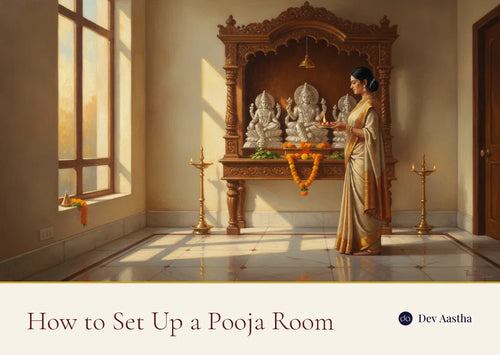
Instead of loose ornaments, the crown, garlands, and finery are part of the casting and then finished by hand. The result is a deity that always looks dressed for darshan, with nothing to slip, tarnish, or store. To give an adorned murti the right home, see how to set up a pooja room at home.

Our pieces are made in this spirit. A murti like this silver-plated Shringar Krishna face idol carries its crown and ornaments as fine, hand-finished detail. It is pure silver plating over a sculpted resin core, so you get the bright silver glow without the cost of solid metal, and we make no solid-silver claims.
The same idea runs through our crowned sets. The Big Crown Lakshmi Ganesh silver-plated idol set wears its mukut and finery as part of the sculpture, which is why crowned pairs suit a mandir where the murtis are never re-dressed.
An adorned idol also makes a thoughtful gift. There is no jewellery to choose or maintain, just a deity that looks complete from the first day on the shelf. If you would rather dress your own murti, that joy is always there. Either path is a lovely way to keep the divine close at home.
Frequently Asked Questions
Which metal is good for a god idol's jewellery?
Silver is the classic and most popular choice for home deities, as it is considered auspicious and has a bright, sacred glow. Gold is reserved for temple or heirloom idols. For daily use on a budget, silver-plated and good artificial sets are widely used and perfectly acceptable for worship.
How do you stick jewellery on an idol?
Most deity jewellery rests, hooks, or ties on using its own loops and threads, so you rarely need glue. Place the mukut on the head, slip necklaces over it, and loop on the smaller pieces last. For a slipping crown on a smooth idol, a tiny bit of soft removable putty is safer than strong glue or tape.
What are the names of the pieces of deity jewellery?
The main pieces are the mukut (crown), haar and mala (necklaces and garlands), karanphool (earrings), bajuband (armlets), kangan (bangles), kamarband (waistband), nath and tika (nose ring and forehead pendant), and payal (anklets). Dressed deities also wear a poshak or vastra, the clothing tied on before the ornaments.
Can I use artificial jewellery for god idols?
Yes. Artificial jewellery for god idols is common and completely acceptable. A light, well-made set lets you change the deity's look for each festival without a big spend. Just check that the finish is neat and the edges are smooth so they do not scratch the murti.
How do I clean silver-plated deity jewellery?
Dust it regularly with a soft, dry cloth or a clean brush, and use a dedicated silver cloth when it dulls. Avoid long soaking and harsh chemicals, which can lift the plating. Make sure each piece is fully dry before you put it back on the idol or into storage, as trapped moisture causes tarnish.
Bhagwan ki murti ka shringar kaise karein?
Pehle murti ko saaf aur sukha kar lein. Phir vastra ya poshak bandhein, sir par mukut rakhein, aur gale mein haar aur mala pehnaayein. Kangan, kamarband aur payal jaise chhote gehne sabse aakhir mein lagaayein. Shringar prem aur shraddha se karein, aur gehne halke aur murti ke naap ke hisaab se chunein.
Explore more
Related guides: Choosing god idols for your pooja room · Choosing and placing god idols for your home · Choosing your Ganesh murti for home
Shop the collections: God idols · Devotional idols

Written by Sneha Kulkarni · Updated June 2026
Sneha covers divine home decor for Dev Aastha, on how to style spiritual pieces so they feel at home in a modern Indian house. Her guides blend design sense with respect for what each piece means.
Sneha covers divine home decor for Dev Aastha, on how to style spiritual pieces so they feel at home in a modern Indian house. Her guides blend design sense with respect for what each piece means.
Keep reading
More from the journal
Discussion
