

Diwali Home Decoration Ideas: A Room-by-Room Guide for 2026

The best Diwali home decoration ideas start with light and a clean house, then build outward: a bright entrance, a glowing pooja room, and warm pools of lamplight through the rest of the rooms. You do not need a decorator or a big budget. You need a small plan and a good eye for where the light should fall.
This guide walks your home room by room, from the main door to the balcony, with practical Diwali home decoration ideas for every space and budget. Diwali 2026 falls on Sunday, 8 November, so you have a clear festive week (6 to 11 November) to plan around. Let us begin where every guest begins, at your front door.
Key takeaways
- Clean first, decorate second. Diwali decor sits best in a freshly cleaned, decluttered home, which is why the deep clean comes days before the diyas.
- Work room by room, starting with the entrance and pooja room, the two spaces that carry the most meaning on Diwali night.
- Layer your light. Mix traditional oil diyas with steady LED strings and candles so the house glows warmly without a fire risk.
- A little goes far. A rangoli, a marigold toran, and a row of diyas at the door create more impact than an expensive gadget.
- Diwali 2026 is Sunday, 8 November; most homes decorate over the five festive days from 6 to 11 November.
When to start decorating for Diwali 2026
Most families deep-clean the home in the week before Diwali and put up the decorations one to three days before the main day, which in 2026 is Sunday, 8 November. The cleaning is not just housekeeping. It is the older custom of making the home worthy of Lakshmi, who is believed to enter only a clean, bright house.
A simple timeline keeps the week calm instead of frantic:
- One week before (from around 1 November): deep clean, declutter, and repair or replace anything broken.
- Dhanteras, Friday 6 November: put up the first diyas and buy any new decor or utensils.
- Kali Chaudas / pre-Diwali prep, Saturday 7 November: draw the rangoli base, hang torans, and set up the pooja room.
- Diwali, Sunday 8 November: light every diya and lamp in the evening for Lakshmi Puja.
Spreading the work across the five festive days means you enjoy the festival instead of rushing it. Once the house is clean, the front of the home is where your decor makes its first impression. Start there.
The main door and entrance
The entrance is the single most important space to decorate for Diwali, because it is where the home welcomes both guests and Lakshmi. A toran above the door, a rangoli below, and diyas on either side is the classic combination that never looks wrong.
Build the doorway in three simple layers:
- Above the door: a toran of fresh marigold and mango leaves, or a lasting beaded or metal bandhanwar you reuse each year.
- On the threshold: a rangoli, plus small painted footprints leading inward to show Lakshmi the way in.
- Beside the door: a pair of diyas or lanterns, and a brass or silver-toned accent that catches the light.
A door piece with the Shubh Labh symbol is a traditional favourite here, since the words mean auspiciousness and profit. A handcrafted silver-plated Shubh Labh door hanging gives the same welcome as a marigold toran but lasts well beyond the festival. Keep the main door open and lit through the evening, an old sign that the family is ready to receive blessings.

Get the entrance right and the rest of the home follows its lead. The most beautiful part of any Indian doorway on Diwali is, of course, the rangoli.
Rangoli ideas for every skill level
A rangoli is a coloured floor design drawn at the entrance or in the courtyard to welcome guests and the Goddess, and you can make one whether or not you can draw. The pattern matters less than the intention behind it. Even a simple ring of flowers counts.
Match the method to your comfort and time:
- Beginner: use a plastic rangoli stencil with dry colours, or arrange marigold and rose petals into a circle. No drawing needed.
- Intermediate: a dot-grid (bindu) pattern joined into flowers or a lotus, filled with two or three colours.
- Advanced: a free-hand peacock, diya or Lakshmi-feet design, shaded from dark to light for depth.
Flower rangoli made only from petals is having a real moment, and for good reason. It is quick, smells wonderful, and is easy to clear away, which suits homes with pets or small children. For a no-mess option, reusable stick-on rangoli mats give a clean look in seconds and store flat for next year.
Place a small diya at each corner of the rangoli to make it glow after dark. With the floor and the door done, it is time for the element that gives Diwali its name, the light.
Diyas, candles and lights (done safely)
Diwali lighting works best in layers: traditional oil diyas for warmth and ritual, candles for height, and LED strings for a steady glow that needs no watching. The word Deepavali literally means a row of lamps, so the diya is the heart of the whole festival.
Think of your lighting in three tiers that work together:
| Type | Best for | Keep in mind |
|---|---|---|
| Clay or metal oil diyas | Pooja room, threshold, rangoli corners | The traditional choice; needs supervision and a safe, still spot |
| Candles and tealights | Centerpieces, shelves, balcony rails | Add height and scent; place in holders on heat-safe surfaces |
| LED string and fairy lights | Windows, railings, plants, curtains | Safe to leave on for hours; choose warm white over harsh multicolour |
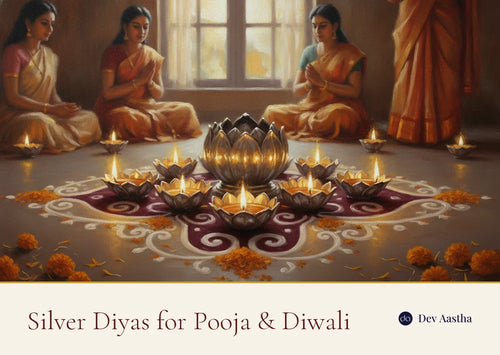
Decorative diyas do double duty as decor and as puja lamps. A pair of handcrafted silver-plated lotus diyas sits beautifully on a pooja thali or a console, giving the gleam of pure silver plating without the cost of solid silver. Fill them with ghee or oil on Diwali night, or with a wax tealight for easy, spill-free light.

Skip the harsh, blinking multicolour bulbs of the past. Warm white fairy lights draped over a curtain or wound through a plant read far more elegant. The softest, most meaningful glow in the house, though, belongs in the pooja room.
Decorating the pooja room for Diwali
The pooja room is the spiritual centre of the home on Diwali, so it deserves the most care: a spotless mandir, fresh flowers, the idols cleaned and dressed, and the diyas ready for Lakshmi Puja. This is where a decor guide and a devout household truly meet. If your mandir is new this year, our complete pooja room setup guide walks through the direction and the essentials.
A simple way to prepare the mandir:
- Clean and clear. Wipe the mandir, wash the idols gently, and remove any wilted flowers or old wicks.
- Dress the space. Lay a fresh red or yellow cloth, and string a small marigold garland across the top.
- Arrange the deities. Place Lakshmi and Ganesha at the centre for Diwali, with Lakshmi on the right and Ganesha on her left.
- Set the lamps. Line the front with diyas and keep an akhand diya, one that burns through the night, to the side.
A well-kept Lakshmi Ganesh idol set makes a natural centrepiece for the Diwali mandir, the two deities of wealth and wisdom worshipped side by side. Add a small kalash of water topped with mango leaves and a coconut for the traditional purna-kalash. If you want the placement exactly right, our guide on which direction the Lakshmi idol should face covers the vastu in full.
For a deeper look at building and styling the mandir itself, see our guide to choosing god idols for your pooja room. With the sacred space ready, we can move into the room where the family and guests gather, the living room.
Living room and festive centerpieces
In the living room, one strong centerpiece plus warm textiles and soft light does more than a dozen scattered pieces. This is the room where guests sit, so aim for a warm, welcoming glow rather than a crowded display.
A floating-flower urli is the easiest showstopper in Indian homes. Fill a wide, shallow bowl with water, float a few tealights and fresh rose or marigold petals, and set it on the coffee table. It costs very little and looks like it took real effort.
Around that centerpiece, warm up the room with a few quick touches:
- Textiles: swap in cushion covers and a throw in festive jewel tones like maroon, mustard or emerald.
- Metallic accents: a silver or gold-toned showpiece on a shelf catches lamplight and adds sparkle.
- Fresh flowers: a small vase of marigolds or a bowl of rose petals lifts the whole space.
A pair of silver-plated candle holders or a decorative showpiece from a home decor collection works all year, not just at Diwali, which makes it a smart buy. Keep surfaces uncluttered so the eye rests on the light. Not everyone has a large living room, though, so the next section is for compact homes.
Balcony, windows and small spaces
Small homes and flats decorate beautifully for Diwali by using vertical space, windows and the balcony, so the light is seen without cluttering the floor. A one-BHK can glow just as warmly as a bungalow with the right focus.
Make the most of a compact home with a few targeted moves:
- Windows: line the sills with tealights and frame the panes with warm fairy lights so the glow is visible from outside.
- Balcony railings: wrap string lights along the rail and stand a few diyas in the corners for a cosy evening spot.
- Vertical corners: a hanging lantern or a wall bandhanwar draws the eye up and frees the floor.
- One feature wall: pick a single wall for a light curtain or a cluster of paper lanterns instead of spreading decor thin.
In a small space, restraint is the whole trick. A clean surface with one glowing urli and a row of diyas feels richer than every shelf being full. Whether your home is big or small, the next choice is one of style, traditional or modern.
Modern vs traditional Diwali decor
Traditional Diwali decor leans on clay diyas, marigolds and bright colour, while modern decor uses metallics, warm white light and a calmer palette; the happiest homes borrow from both. Neither is more correct, so choose what suits your rooms and your taste.
Here is how the two styles compare on the elements you will actually decorate with:
| Element | Traditional | Modern |
|---|---|---|
| Lighting | Clay oil diyas, coloured bulbs | Warm white LED strings, candles |
| Colour | Bright reds, oranges, multicolour | Ivory and cream with metallic gold or silver accents |
| Rangoli | Coloured powder, free-hand | Flower petals, geometric stencils |
| Flowers | Marigold and mango-leaf garlands | Minimal floating-flower urli, single stems |
| Accents | Brass lamps, terracotta | Silver-plated showpieces, glass, clean lines |
A blended look works beautifully in most Indian homes: keep the diyas, the rangoli and the marigolds for their meaning, and let the palette and the string lights bring a calmer, contemporary feel. That balance also happens to be kind to the wallet, which brings us to budget.
Diwali decoration on a budget
You can decorate a whole home for Diwali on a small budget by leaning on diyas, flowers and rangoli, and adding one or two lasting pieces you reuse every year. The most loved Diwali home decoration ideas are rarely the most expensive ones.
A rough guide to where your money goes furthest:
| Budget | Focus on | Example spend |
|---|---|---|
| Under ₹500 | Clay diyas, marigold garlands, a rangoli stencil, tealights | Fresh, all-DIY entrance and pooja setup |
| ₹500 to ₹2,000 | Add fairy lights, a floating-flower urli, cushion covers | A warm, layered living room and balcony |
| ₹2,000 and up | One lasting piece: silver-plated diyas, a door hanging or an idol set | A festive base you reuse for years |
The smart approach mixes the cheap and cheerful with one or two keepers. Flowers, diyas and rangoli refresh the look for almost nothing each year, while a festive decor piece bought once becomes part of the family's Diwali for a decade. Buy the lasting things slowly, one good piece per festival. Before you light up, a quick word on the mistakes that trip people up.
Common mistakes and safety tips
The most common Diwali decorating mistakes are decorating before cleaning, overcrowding every surface, and placing open diyas near curtains or dupattas. A little care keeps the festival warm and safe.
Watch out for these, in order of how often they cause trouble:
- Fire safety first. Keep oil diyas and candles away from curtains, flowing clothes and paper decor, and never leave a flame in an empty room.
- Do not skip the clean. Decor over dust and clutter looks tired; the deep clean is what makes everything else shine.
- Avoid overcrowding. Leave empty space so the light and a few good pieces stand out, rather than filling every inch.
- Mind the wiring. Check LED strings for frayed wires before use and do not overload a single socket.
- Keep pets and children in mind. Set diyas on high, stable surfaces and prefer petal rangoli where little hands roam.
Handled with a bit of thought, these small precautions let you relax and enjoy the glow. May your home shine warmly this Diwali, and may the light bring health and prosperity to everyone under your roof.
Frequently asked questions
How can I decorate my home for Diwali?
Start by deep-cleaning the house, then decorate room by room. Focus first on the entrance with a toran, a rangoli and diyas, and on the pooja room with fresh flowers and lamps. Add layered light through the living room using diyas, candles and warm LED strings, and finish with festive textiles and a floating-flower urli as a centerpiece.
When should I start decorating for Diwali 2026?
Deep-clean in the week before, then put up decorations one to three days ahead. Diwali 2026 falls on Sunday, 8 November, and most homes decorate across the five festive days from Dhanteras on 6 November to Bhai Dooj on 11 November. Rangoli and fresh flowers are best done on Choti Diwali or the morning of Diwali so they stay fresh.
How do I decorate a small home or flat for Diwali?
Use vertical space and light instead of floor decor. Line window sills with tealights, wrap warm fairy lights around railings and plants, and hang a lantern or bandhanwar in a corner. Pick one feature wall or one glowing centerpiece rather than spreading decor across every surface, which keeps a compact home feeling bright, not cluttered.
What are the essential Diwali decoration items?
The core items are diyas, a rangoli or stencil, a door toran or bandhanwar, fresh marigold flowers, candles or tealights, and warm string lights. A wide urli bowl for a floating-flower centerpiece and a few festive cushion covers round out the look. One lasting silver-plated or brass piece is a nice addition you reuse each year.
Diwali par ghar kaise sajaye?
Sabse pehle ghar ki achhi tarah safai karein, phir kamre ke hisaab se sajaayein. Mukhya darwaze par toran, rangoli aur diye lagaayein, aur pooja ghar ko phool, mala aur diyon se sajaayein. Baithak mein diye, mombatti aur warm LED lights ka layer banaayein, aur ek urli mein phool aur tealight rakhkar center piece taiyaar karein.
Explore more
Related guides: Choosing god idols for your pooja room · Which direction should the Lakshmi idol face · Lakshmi Ganesh idol: prosperity and wisdom at home · silver diyas and candle holders for Diwali · Pooja room vastu: where the mandir and idols go · 7 horses vastu direction and placement · Kamdhenu cow vastu: direction and placement · Peacock and swan pair vastu placement
Shop the collection: Festival gifts · Pooja essentials
Featured pieces: Silver-plated Lakshmi Ganesh idol set · Silver-plated peacock candle holder · Dev Aastha Silver-Plated Hanging Parrot Wall Decor · Silver-plated Shubh Labh door hanging

Sneha Kulkarni
Sneha covers divine home decor for Dev Aastha, styling spiritual pieces so they feel at home in a modern Indian house. Her guides blend design sense with respect for what each piece means.
Sneha covers divine home decor for Dev Aastha, styling spiritual pieces so they feel at home in a modern Indian house. Her guides blend design sense with respect for what each piece means.
Keep reading
More from the journal
Discussion
No comments yet
Share your thoughts or ask a question below.

