
A complete Diwali pooja samagri list is the one thing that keeps your Lakshmi Puja calm and unhurried. Get the items together a day ahead and the puja evening runs on its own. This guide gives you the full checklist, grouped so nothing is forgotten. It also explains what each item means, the easy kitchen swaps, and a short version for a small first puja.
Most of the Diwali pooja samagri already lives in an Indian kitchen or on the mandir shelf. You rarely need a fancy market kit. Below is the whole list a home Lakshmi Puja asks for, why each thing is there, and how the list shifts a little by region and tradition.
The Diwali pooja samagri list at a glance: Lakshmi and Ganesha idols, a chowki with red cloth, a kalash with coconut, diyas with ghee and wicks, roli, kumkum, haldi, akshat, fresh flowers, incense and camphor, a bell and aarti thali, sweets for bhog, and coins. The full grouped checklist with meanings is below.
| Samagri item | Purpose in the puja |
|---|---|
| Idols of Lakshmi and Ganesha | The focus of the Lakshmi Puja |
| Chowki with a red or yellow cloth | Clean seat for the deities |
| Kalash with water, coin, mango leaves, coconut | The pot of abundance |
| Diyas, cotton wicks, ghee or oil | The light that invites Lakshmi |
| Roli, kumkum, haldi, chandan | Tilak for the idols and family |
| Akshat (unbroken rice) | Offered at almost every step |
| Fresh flowers, lotus and marigold | Lakshmi's favourite offering |
| Incense, dhoop, camphor, bell, aarti thali | Fragrance and the aarti |
| Sweets, kheel-batashe and fruit | Naivedya, the bhog |
| Coins, notes, gold or silver items | Placed before Lakshmi for blessing |
Key takeaways
- The core Diwali pooja samagri list is idols of Lakshmi and Ganesha, a kalash with a coconut, diyas with ghee, kumkum and akshat, flowers, incense, an aarti thali, sweets for bhog, and coins to place before the Goddess.
- Diwali 2026 falls on Sunday, 8 November, so plan to buy and gather your samagri by Dhanteras (6 November) at the latest.
- Keep everything on one tray the day before, so nothing sends you to the market on the puja evening.
- Every item carries a meaning: the diya is the invitation, the kalash is abundance, akshat is wholeness, and the coins are Lakshmi's blessing on your wealth.
- A simple, sincere puja with a short list is complete on its own. You do not need every traditional extra to welcome the Goddess.
What is the Diwali pooja samagri list?
The Diwali pooja samagri list is the set of items needed to perform Lakshmi Puja on Diwali night, from the idols and the kalash to the diyas, flowers, bhog and coins. Samagri simply means the materials of worship, the things you place before the deity and offer during the puja.
On Diwali, the worship is mainly of Goddess Lakshmi, with Ganesha honoured first. So the list is built around inviting Lakshmi with light, fragrance, sweetness and wealth. Each item is a small offering, and together they make the welcome complete.
The good news is that the list is forgiving. Families across India keep slightly different versions, and none of them is wrong. Gather what you can, offer it with care, and the puja is whole. First, the date to plan around so you have time to collect everything.
Diwali 2026 date and when to gather your samagri
Diwali 2026 falls on Sunday, 8 November, and the smart move is to have your full samagri list ready by Dhanteras on 6 November. That way the puja evening is for worship, not for last-minute trips to a crowded market.
Diwali is a five-day festival, and the shopping naturally spreads across it. Here is how the days fall in 2026:
| Day | Date | Festival | What to do |
|---|---|---|---|
| 1 | Fri, 6 Nov | Dhanteras | Buy idols, diyas, silver or coins; finish the samagri list |
| 2 | Sat, 7 Nov | Choti Diwali | Buy fresh flowers, sweets and fruit; deep-clean the home |
| 3 | Sun, 8 Nov | Diwali, Lakshmi Puja | Set the chowki, do the puja in the evening muhurat |
| 4 | Mon, 9 Nov | Govardhan Puja | Annakut bhog |
| 5 | Tue, 10 Nov | Bhai Dooj | Tilak and gifts for siblings |
Buy the lasting items early, on or before Dhanteras: the idols, diya sets, the kalash, a bell and the aarti thali. These are the pieces you reuse every year, so it is worth choosing them well rather than grabbing the cheapest on the night.
Leave only the perishables for the last day or two, the flowers, sweets, fruit and a fresh coconut. With the timing clear, here is the full list to work from.
The complete Diwali pooja samagri list
Here is the complete Diwali pooja samagri list, grouped into categories so you can tick it off in one go. Copy it into your notes app and shop straight from it. Almost every item is inexpensive and easy to find.
Idols, altar and the sacred pot:
| Item | What it is for |
|---|---|
| Idols of Lakshmi and Ganesha | The focus of the puja, placed with Ganesha on Lakshmi's left |
| Chowki and a red or yellow cloth | A clean raised seat for the deities |
| Kalash (lota), water, a coin, supari, mango leaves, coconut | The pot of abundance set at the centre |
| A small idol or photo of Kuber and Saraswati | Optional, for wealth and wisdom alongside Lakshmi |
Lamps, fragrance and the aarti tray:
| Item | What it is for |
|---|---|
| Diyas, cotton wicks (batti), ghee or oil | The lights that invite Lakshmi; the heart of the night |
| Incense sticks, dhoop, camphor (kapoor) | Fragrant offering and the aarti flame |
| A bell (ghanti) and an aarti thali | To mark the worship and carry the aarti lamp |
| Matchbox or lighter | An easy thing to forget on the night |
Tilak, sacred powders and offerings:
| Item | What it is for |
|---|---|
| Roli, kumkum, haldi, chandan (sandalwood) | Tilak for the idols and the family |
| Akshat (unbroken rice mixed with a little haldi) | Offered at almost every step of the puja |
| Fresh flowers, especially lotus and marigold, and a garland | Lakshmi's favourite offering |
| Durva grass, betel leaves (paan) and betel nuts (supari) | Traditional offerings to Ganesha and the kalash |
Bhog, wealth and the finishing touches:
| Item | What it is for |
|---|---|
| Sweets (kheer, ladoo, batasha, mishri) and fruit | Naivedya, the food offered to the Goddess |
| Kheel and batashe, sugarcane | The classic Diwali prasad in North India |
| Coins, new currency notes, gold or silver items | Placed before Lakshmi for her blessing |
| Panchamrit (milk, curd, ghee, honey, sugar) and Gangajal | For abhishek and to purify the space |
| Account books or a money box (for businesses) | Blessed in the Chopda Pujan |
If you are setting up fresh this year, a tidy set of pooja essentials like a clean diya set, a bell and a thali makes the whole ritual feel cared-for. Now, the part most lists skip: what each of these items actually means.
What each item on the samagri list means
Every item on the Diwali pooja samagri list carries a meaning, and knowing it makes the puja feel less like a checklist and more like a conversation with the Goddess. Here is the thought behind the main offerings.
The diya and the light
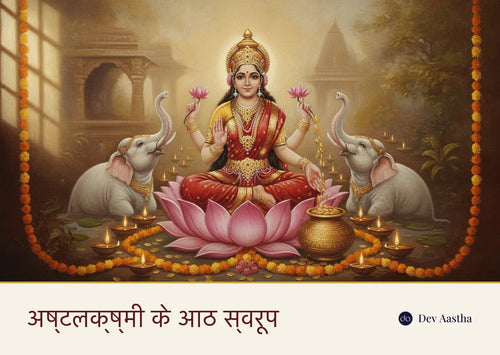
The diya is the single most important item on the list. Lakshmi is said to walk the earth on the dark Amavasya night and step into homes that are lit and welcoming. Each lamp is a literal invitation, which is why one diya is kept burning right through the night.
The kalash and coconut
The kalash filled with water and topped with a coconut and mango leaves stands for abundance and the source of life. The water is the ocean from which Lakshmi arose, and the coconut is a symbol of a fruitful, complete offering placed at the heart of the puja. Our note on the significance of kalash and nariyal in pooja goes deeper into this.
Akshat, kumkum and haldi
Akshat is unbroken rice, and the unbroken part is the point: it stands for wholeness and a wish that stays intact. Kumkum and haldi are marks of auspiciousness and the feminine energy of the Goddess, applied as tilak to honour her and to bless the family.

Flowers, especially the lotus
Lakshmi is most often shown seated on a lotus, so the lotus and marigold are her favoured flowers. Fresh blooms stand for beauty, purity and a heart that opens to the divine. Wilting or plucked-the-day-before flowers are avoided, since the offering should be at its freshest.
Coins, sweets and the bhog
The coins, notes and silver placed before Lakshmi ask for her blessing on the family's wealth, not for more money alone but for prosperity that is well kept. The sweets and bhog stand for gratitude and joy, sharing the sweetness of the festival with the Goddess before the family.
A small silver-plated Kuber Kalash placed beside Lakshmi is a simple way to honour Kuber, the treasurer of the gods, on the same chowki. With the meaning clear, here is how much of this you already own.
What you already have at home (and easy substitutes)
Most of the Diwali pooja samagri list is already in your kitchen, so the actual shopping is short. Before you head to the market, check the shelves. You will be surprised how little you need to buy fresh.
Things you almost certainly already have:
- Rice, haldi and sugar for akshat, tilak and panchamrit
- Ghee, oil and cotton wool for the diyas and wicks
- Milk, curd and honey for panchamrit
- A steel thali and a small bell or katori for the aarti
- Coins and a few notes from your purse
When something is missing, a simple substitute is fine. The Goddess responds to devotion, not to a perfect shopping list. A few easy swaps:
- No lotus? Marigold, rose or any fresh seasonal flower works.
- No Gangajal? Clean water with a tulsi leaf added is enough to purify.
- No silver coin for the kalash? Any clean coin from your pocket does the job.
- No camphor? A ghee diya carries the aarti flame just as well.
What is genuinely worth buying well, rather than substituting, are the idols and a good diya set, since you reuse them every Diwali. A handcrafted silver-plated lotus diya set makes that all-night flame a little more special and stores neatly for next year. Next, a stripped-back list for a first or small puja.
A simple samagri list for a small or first puja
If this is your first Diwali puja or you live in a small home, a short samagri list done with care is completely valid. Lakshmi is welcomed by sincerity and light, not by the length of the list.
The essentials, and nothing more, are:
- Idols of Lakshmi and Ganesha, or a simple framed photo if you do not have idols yet
- A few diyas with ghee or oil, plus wicks and a matchbox
- Kumkum, haldi and a small bowl of rice for akshat and tilak
- Fresh flowers, whatever is in season
- Incense and a bell for the aarti
- Sweets and a fruit for bhog, and a coin to place before the Goddess

With these six things you can do a complete, warm Lakshmi Puja in twenty minutes. Add the traditional extras in the years that follow, as your mandir grows. To get the idol placement right on your chowki, our guide on which direction the Lakshmi idol should face covers the vastu. Now, how the list shifts across India.
How the samagri list changes by region and tradition
The Diwali pooja samagri list is broadly the same across India, but the small additions change by region and community. None is more correct than another; they are simply different ways of welcoming the same Goddess.
A few of the common variations:
- North India: kheel and batashe (puffed rice and sugar drops), sugarcane, and Ganesha worshipped firmly before Lakshmi. The Chopda Pujan of account books is central for trading families.
- Gujarat and Marwari homes: a strong focus on the business Lakshmi Puja and Sharda Pujan, with new ledgers, a silver coin and a swastika drawn in kumkum.
- Bengal: Diwali night is Kali Puja, so the samagri leans towards hibiscus flowers, red offerings and a different deity, though Lakshmi is honoured on her own day after.
- South India: Deepavali centres on an early-morning oil bath (Ganga snanam) and new clothes, with Lakshmi Puja kept simpler at home.
Many families also add a Shri Yantra, a Dakshinavarti shankh, and panch pallava (five sacred leaves) to the kalash. These are beautiful additions if you have them, but they are not required for a complete puja. To understand why Lakshmi rarely sits alone on the chowki, our guide to the eight forms of Goddess Lakshmi is a warm read. A few cautions keep the gathering smooth.
Common mistakes when gathering your samagri
Most samagri slip-ups are small and easy to avoid with a day's planning. None of them undo your worship, but fixing them keeps the puja evening calm.
- Leaving it all to the last day: markets are packed on Diwali, so buy the lasting items by Dhanteras.
- Forgetting the small things: matchbox, cotton wicks and a coin are the most commonly missed items.
- Buying flowers too early: they wilt; pick them up on Choti Diwali or the morning of the puja.
- A chipped idol or thali: set out clean, unbroken items as a mark of respect.
- Stale or store-bought-days-ago sweets: fresh bhog, even something simple, is offered with more care.
- Over-buying a market kit: you usually own most of it already, so check home first.
Above all, keep the joy of it. A thoughtful piece from our Diwali gifts collection also makes a warm Diwali present for the people you light the lamps with. With the list ready, your Lakshmi Puja is set to be a calm and happy one.
Frequently asked questions
What is the complete Diwali pooja samagri list?
The core list is idols of Lakshmi and Ganesha, a chowki with a red cloth, and a kalash with water and a coconut. Add diyas with ghee and wicks, incense, a bell and an aarti thali. Keep roli, kumkum, haldi, chandan and akshat for tilak. Then fresh lotus and marigold flowers, sweets and fruit for bhog, and coins to place before the Goddess. Most of it is already at home.
What items are needed for Diwali puja?
For Diwali puja at home you need Lakshmi and Ganesha idols, a chowki with a red cloth, a kalash with water and a coconut, diyas with ghee and cotton wicks, a matchbox, roli, kumkum, haldi and akshat, fresh flowers, incense, camphor, a bell and an aarti thali, sweets and fruit for bhog, and a few coins or notes. Panchamrit and Gangajal complete the abhishek.
What samagri is needed for Lakshmi Puja?
Lakshmi Puja samagri centres on the Goddess: her idol with Ganesha, lotus or marigold flowers, a ghee diya kept burning through the night, kumkum and akshat for tilak, panchamrit and Gangajal for the abhishek, kheer, batashe or another fresh sweet as bhog, and coins, notes or a silver item placed before her. Business families also keep their account books for the Chopda Pujan.
When should I buy the Diwali puja samagri for 2026?
Buy the lasting items like idols, diyas, the kalash and the aarti thali by Dhanteras on 6 November 2026, since markets get crowded as Diwali nears. Leave only the perishables, the flowers, sweets, fruit and a fresh coconut, for Choti Diwali or the morning of 8 November.
What is the most important item in Lakshmi Puja samagri?
The diya, or oil lamp, is the most important item. Lakshmi is welcomed into homes that are lit on the dark Amavasya night, so the lamps are a literal invitation. Many families keep at least one diya burning through the whole night near the door or the mandir.
Can I do Diwali puja with a simple samagri list?
Yes. A small list of idols or a photo, a few diyas, kumkum, akshat, fresh flowers, incense, a sweet and a coin is enough for a complete home puja. Lakshmi responds to sincerity and light, not to the length of the list, so a simple puja done with care is entirely valid.
Diwali pooja samagri list mein kya kya aata hai?
Diwali pooja samagri list mein Lakshmi aur Ganesh ji ki murti, chowki aur laal kapda, kalash mein paani aur nariyal, ghee ke diye aur batti, dhoop-agarbatti, ghanti aur aarti thali, roli, kumkum, haldi, chandan, akshat (sabut chawal), phool (kamal aur genda), mithai aur phal bhog ke liye, aur sikke ya note shaamil hote hain. Zyadatar saamaan ghar mein pehle se hi hota hai.
Explore more
Related guides: Hindu festival and vrat calendar 2026 · Diwali gift guide of silver idols and pooja sets · Significance of kalash and nariyal in pooja · The 8 forms of Goddess Lakshmi · Which direction should the Lakshmi idol face
Shop the collection: Pooja essentials · Lakshmi idols
Featured pieces: Silver-plated lotus diya set · Silver-plated Kuber Kalash

Rohan Verma
Rohan writes Dev Aastha's festival guides, the dates, the rituals and the preparations that make each celebration special. He grew up in a household where every festival was an event.
Rohan writes Dev Aastha's festival guides, the dates, the rituals and the preparations that make each celebration special. He grew up in a household where every festival was an event.
Keep reading
More from the journal