
Last updated: 19 August 2026 · About 15 min read · By Rohan Verma
The best Navratri decoration ideas turn an ordinary corner of your home into a glowing shrine for the Goddess, without a big budget or a decorator. Whether you have one shelf or a whole pooja room, you will find a setup here that fits.
This guide walks you through everything for 2026: the dates and Ghatasthapana muhurat, a room-by-room decoration plan, day-wise colour ideas, regional traditions like Golu and Garba, small-space tips, and a short section on thoughtful Navratri gifts.
Key takeaways
- Sharad Navratri 2026 begins on Sunday, 11 October; Dussehra falls on Tuesday, 20 October.
- Start decoration with the mandir, then the entrance, then the wider room, so your effort shows where it matters most.
- Marigolds, diyas, a kalash and a bright fabric backdrop are the four things that carry a Navratri look.
- Match small touches to the day's Navratri colour for an easy, changing theme across nine nights.
- A well-chosen idol or silver kalash doubles as decor now and a keepsake gift after the festival.
On this page
- When is Navratri 2026? Dates and Ghatasthapana muhurat
- Planning your Navratri decoration ideas: where to start
- Entrance and main door decoration
- Decorating your mandir and Navratri chowki
- Decorate by the day: the 9 Navratri colours
- Diyas, lights and rangoli
- Flowers, torans and eco-friendly touches
- Golu, Garba and regional Navratri traditions
- Small-space and apartment decoration ideas
- Thoughtful Navratri gifts for home and family
- Caring for and reusing your decor
- Navratri decoration FAQ
When is Navratri 2026? Dates and Ghatasthapana muhurat
Sharad Navratri 2026 begins on Sunday, 11 October with Ghatasthapana, and the nine nights run to Monday, 19 October. Vijayadashami, or Dussehra, follows on Tuesday, 20 October.
Ghatasthapana, the sowing of barley and the setting of the kalash, is the ritual that opens the festival. It is done in the morning on the first day, during an auspicious window. Timings shift a little by city, so check a local panchang for your exact muhurat before you finalise the setup.
Knowing the calendar helps your decoration too. Most families do the heaviest decorating a day before Ghatasthapana, keep it fresh through Ashtami and Navami, and add a special touch for Dussehra. Here is the day-wise frame for 2026.
| Day | Goddess (Navadurga) | 2026 date |
|---|---|---|
| Day 1 (Pratipada) | Maa Shailaputri | Sun, 11 Oct |
| Day 2 (Dwitiya) | Maa Brahmacharini | Mon, 12 Oct |
| Day 3 (Tritiya) | Maa Chandraghanta | Tue, 13 Oct |
| Day 4 (Chaturthi) | Maa Kushmanda | Wed, 14 Oct |
| Day 5 (Panchami) | Maa Skandamata | Thu, 15 Oct |
| Day 6 (Shashthi) | Maa Katyayani | Fri, 16 Oct |
| Day 7 (Saptami) | Maa Kalaratri | Sat, 17 Oct |
| Day 8 (Ashtami) | Maa Mahagauri | Sun, 18 Oct |
| Day 9 (Navami) | Maa Siddhidatri | Mon, 19 Oct |
Durga Ashtami and Maha Navami puja fall around 18 to 19 October, and some families observe both on the same day when the tithi overlaps. For the full ritual sequence, our Navratri puja vidhi guide covers each night in order. You can also bookmark our Hindu festival and vrat calendar 2026 for the wider season.
Planning your Navratri decoration ideas: where to start
Start with the mandir, then the entrance, then the wider room. This order puts your best effort where the Goddess sits and where guests first arrive, so even a small setup feels complete.
Before you buy anything, walk through your home and pick one focal point. It might be your pooja shelf, a console table, or a corner you can clear for the nine nights. A single well-dressed spot always looks better than tired tinsel spread thin across every wall.
Next, set a rough budget. Navratri decoration ideas scale easily, from a few marigold strings to a full fabric backdrop with lights. The tiers below show what each level typically covers, so you can plan without overspending.
| Budget | What it covers | Best for |
|---|---|---|
| Under ₹500 | Marigold strings, diyas, a rangoli stencil, a simple toran | A refresh of an existing pooja space |
| ₹500 to ₹2,000 | Add fairy lights, a fabric backdrop, a decorative kalash, fresh flowers | A dressed-up mandir for the full nine nights |
| ₹2,000 and above | A new idol or silver kalash, drapes, a themed backdrop, a lamp set | A keepsake setup you reuse every festival |
One last tip before you shop. Buy fresh flowers a day before Ghatasthapana, not a week early, and keep reusable pieces like idols, lamps and torans separate so they last for years. With the plan set, let us move outward from the door.
Entrance and main door decoration
The main door sets the mood before anyone steps inside, so give it a warm, welcoming Navratri look. A toran, a rangoli and a pair of diyas are usually enough to signal the festival.
Hang a fresh toran of marigold and mango leaves across the top of the door frame. If you want something that lasts all nine nights, a beaded or fabric bandhanwar holds up better than fresh flowers in warm weather. Many families keep both, fresh in front and reusable behind.
On the floor just outside, lay a rangoli. A lotus, a pair of footprints walking in, or a simple geometric grid all suit Navratri. Flower-petal rangoli lasts a day and is easy to redo; powder rangoli holds longer if the spot is sheltered.
Frame the doorway with light. A row of small diyas on each side, or a string of warm fairy lights around the frame, makes the entrance glow at dusk when most aarti happens. In vastu terms the main door is where energy enters, so keeping it clean, lit and free of clutter matters as much as the decoration itself.
Finish with a small brass or clay urli filled with water and floating flowers and tealights, set to one side of the threshold. It is a quiet, elegant touch that guests always notice. Inside the door, your mandir is next.
Decorating your mandir and Navratri chowki
The mandir is the heart of Navratri, so this is where most of your decoration should go. Build it in layers: a clean base, a fabric backdrop, the idol and kalash, then flowers and light.
Start by clearing and wiping the shelf or chowki. Cover it with a fresh cloth in a bright festival shade, red, yellow or green work beautifully. A small chowki draped in silk with a contrasting border instantly reads as festive, even before you add anything else.
For the backdrop, drape a length of bandhani, brocade or plain silk behind the idol and gather it with a tie or a string of flowers. This single step does more for a mandir photo than almost anything else, and the fabric folds away for reuse.
If you want a stronger theme for your Navratri mandir, work to one idea. A lotus backdrop cut from card and paint, a mirror-work Gujarati panel, or a soft pastel drape with fairy lights behind it each give a different mood. Pick one and let the rest of the shelf stay simple, so the backdrop and idol lead the eye.
The idol at the centre is what the whole shelf is built around. If you are still choosing one, our guide to choosing a Durga idol for your Navratri mandir covers the right form, the material, the size that suits a home mandir and the vastu direction to place her in.

Set the kalash at the centre or to the side of the idol. A traditional Ghatasthapana kalash is a pot of water topped with mango leaves and a coconut, wrapped with a sacred thread. For a lasting piece, a silver-plated kalash catches the diya light and returns every year, unlike a clay pot you set anew each time.
Place the idol slightly raised on the chowki so it stands above the offerings. For where the idol should face, our guide to idol direction and placement covers the vastu rules in detail. As a simple rule, seat the deity so you face east or north during aarti.
Finish the mandir with a fresh marigold garland along the top, a couple of diyas at the base, and a small bell and thali kept ready. Keep it uncluttered so the Goddess remains the focus. Next, let the day's colour guide your accents.
Decorate by the day: the 9 Navratri colours
Each day of Navratri has an associated colour, and matching a small decoration to it gives you an easy theme that changes across the nine nights. You do not need to redo the whole mandir, just swap one or two accents.
The nine colours cycle through shades like royal blue, yellow, green, grey, orange, white, red, sky blue and pink, and the exact day-to-colour order shifts each year with the starting weekday. For the confirmed 2026 day-wise list, see our dedicated guide to the Navratri 9 colours and their meaning.
Here are simple ways to bring the day's colour in without much effort:
- Swap the chowki cloth or a runner to the day's shade.
- Tie a matching ribbon or dupatta as the backdrop gather.
- Change the flower colour, marigold for orange and yellow, roses for red and pink.
- Add coloured tealight holders or a small rangoli in the day's tone.
- Wear the colour yourself and echo it in one mandir accent.
This colour-a-day idea is popular because it keeps the setup feeling new each evening, which is lovely when family gathers for aarti. With the theme sorted, light is what makes it all glow.
Diyas, lights and rangoli
Light is what turns decoration into atmosphere, so treat diyas, lamps and fairy lights as the finishing layer of every Navratri setup. Warm light flatters silver, brass and flowers alike.
Clay diyas are the traditional choice and cost very little. Line them along the mandir base, the window sill and the entrance. If you worry about open flames near children or curtains, mix in a few LED diyas that flicker like the real thing and stay lit through a long aarti.
String lights do the heavy lifting for ambience. Warm-white fairy lights around the backdrop or along a shelf give a soft, even glow. Save the bright multicolour strings for a balcony or society display, where their energy suits a shared space.
Do not overlook the window. A row of diyas or a light curtain on the sill carries your Navratri glow to the street, and it looks lovely from both inside and outside. In a society, a matching balcony line adds to the shared festive mood without any extra effort.
Rangoli ties the floor into the scheme. For Navratri, a Goddess motif, a trishul, a lotus or nine dots for the nine nights all work well. Keep a small rangoli near the mandir and a larger one at the entrance. Flower-petal rangoli is quick, eco-friendly and easy to change to the day's colour.
Together, diyas, lights and rangoli need barely any budget yet carry the whole festive feeling. Fresh flowers add the final natural touch.
Flowers, torans and eco-friendly touches
Fresh flowers are the fastest way to make any corner feel festive, and they keep Navratri decoration natural and fragrant. Marigold and jasmine are the classic pair for their colour and scent.
Use marigold for garlands and torans, jasmine for fragrance near the idol, and a few roses or gerberas for pops of the day's colour. Mango leaves are traditional with the kalash and last several days. Buy blooms the evening before you need them and keep the stems in water until you string them.
Eco-friendly decoration is a growing choice, and it suits Navratri well. A few easy swaps:
- Choose fresh flowers and leaves over plastic garlands.
- Reuse fabric drapes, torans and idols year after year.
- Pick clay diyas and natural rangoli colours from flowers or rice.
- Compost flower waste after visarjan instead of binning it.
These small choices keep the festival gentle on the home and the environment, and they often cost less too. Beyond the home shrine, India celebrates Navratri in wonderfully different ways.
Golu, Garba and regional Navratri traditions
Navratri decoration looks different across India, and borrowing an idea from another region is a lovely way to refresh your own setup. Three traditions stand out: Golu, Garba and Durga Puja pandals.
In Tamil Nadu, Karnataka and Andhra Pradesh, families arrange a Golu (also called Bommai Kolu): tiered steps, usually odd in number, filled with dolls and figurines of gods, saints and everyday life. If you have a stepped shelf, a small Golu of your idols and figurines is a beautiful, story-rich display.
In Gujarat, Navratri means Garba and Dandiya, and the decoration follows the dance. Think bright mirror-work drapes, a decorated central mandvo or lamp, colourful bunting and vibrant chaniya-choli tones. Even at home, a mirror-work runner and bold colour bring that Garba energy indoors.
In West Bengal and the east, Durga Puja fills the same nine days with grand pandals and clay Durga idols. You can echo it with a themed backdrop and a strong focus on the Goddess, framed by flowers and light.
You do not have to pick one. Many modern homes blend a South Indian Golu shelf with a Gujarati mirror-work drape and a marigold-heavy North Indian mandir. The mix is part of the fun. Once the decor is set, attention often turns to gifts.
Small-space and apartment decoration ideas
A small flat can look just as festive as a big house, so scale the setup to your space instead of skipping it. In a compact home, one bright, well-lit corner reads better than decoration scattered across every wall.
Use vertical space to your advantage. Hang a fabric backdrop and a flower string on the wall behind a slim console, so the shrine rises upward instead of spreading out. Wall-mounted fairy lights and a single hanging toran add height without taking floor room.
For renters, choose damage-free options: adhesive hooks, tension rods for drapes, and standing lamps instead of nailed fittings. A folding chowki or a tray you can lift away lets you set up for the nine nights and clear it afterwards in minutes.
A few small-space wins that punch above their size:
- A mirror behind the mandir doubles the glow of your diyas.
- A single statement idol beats a crowded shelf of small pieces.
- Warm-white lights make a tiny corner feel larger and softer.
- A round flower rangoli on a brass plate needs no floor space at all.
Watch a couple of common mistakes too. Do not block a walkway with the setup, keep open flames well clear of curtains and dupattas, and avoid over-decorating to the point the idol gets lost. A calm, clean shrine always feels more devotional. With the home ready, a gift completes the visit.
Thoughtful Navratri gifts for home and family
Navratri is a season of visiting and hosting, so a small, meaningful gift is always welcome. The best Navratri gifts carry a blessing and last beyond the festival, unlike sweets that are gone in a day.
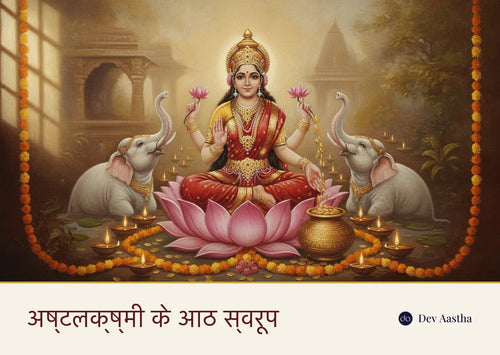
For close family and elders, a deity idol is a gift with real weight of meaning. A silver-plated Lakshmi idol suits the season, since Navratri, Dussehra and the run-up to Diwali all celebrate the Goddess and prosperity. It sits in the mandir as decor now and stays as a keepsake for years.

These pieces are pure silver plating over a resin core, hand-finished for a bright silver lustre without the cost of solid silver. That makes them a premium-looking gift that stays within a sensible budget, and each one comes gift-boxed.
Here are simple, occasion-matched ideas by budget:
- Under ₹1,000: a small kalash, a pair of diyas, or a decorative showpiece for a hostess.
- ₹1,000 to ₹2,000: a silver-plated Lakshmi idol or a decorative kalash for close family.
- ₹2,000 and above: a Lakshmi Ganesh set for a newly married couple or a housewarming during the season.
Do not forget Kanya Pujan on Ashtami or Navami, when young girls are honoured as forms of the Goddess. Alongside the traditional halwa, puri and chana, a small token like a coin, a hair accessory or a little decorative diya makes the blessing feel special. Keep these gifts simple, age-appropriate and given with warmth.
If you are gifting in bulk or want more options, our festival gifts collection gathers pieces suited to Navratri and Diwali in one place. Choose something the family will keep, and the gift becomes part of their festivals for years. After the celebration, a little care keeps your own decor ready for next time.
Caring for and reusing your decor
Good Navratri decoration is an investment you reuse, so pack it away well and most of it will serve you for years. Sort pieces into reusable and disposable as you take the setup down.
Compost or immerse fresh flowers and leaves respectfully after the festival. Fold fabric drapes and torans, and store them flat with a few silica sachets to keep off damp. Wrap diyas and lamps in newspaper so they do not chip.
Silver-plated idols and kalash need only a soft, dry cloth after each use; keep them away from moisture and harsh polish so the plating stays bright. A quick wipe and a soft pouch is enough between festivals.
Label one box "Navratri and Diwali decor" and you will thank yourself in a few weeks, since Diwali follows soon after. For more ideas that carry over, see our Diwali home decoration ideas. With everything stored, you are set for the whole festive season.
Navratri decoration FAQ
How can I decorate my home for Navratri on a low budget?
Focus your spend on the mandir and the main door, and use inexpensive naturals elsewhere. Marigold strings, clay diyas, a flower rangoli and a bright cloth backdrop cost very little and carry most of the festive look. Reuse a fabric drape and a few lamps each year to keep costs down.
How do I decorate the mandir for Navratri?
Clean the shelf, cover it with a fresh bright cloth, and hang a silk or bandhani backdrop behind the idol. Set the kalash beside the deity, add a marigold garland along the top, and place diyas at the base. Keep it uncluttered so the Goddess stays the focus.
What is the Ghatasthapana muhurat for Navratri 2026?
Ghatasthapana is done on the morning of the first day, Sunday 11 October 2026, during an auspicious window. The exact timing depends on your city's sunrise, so confirm it with a local panchang before you set the kalash.
Which flowers are best for Navratri decoration?
Marigold and jasmine are the classic pair, marigold for garlands and torans, jasmine for fragrance near the idol. Add roses or gerberas for pops of the day's colour, and use mango leaves with the kalash. Buy flowers the evening before so they stay fresh.
Kya Navratri decoration Diwali ke liye reuse kar sakte hain?
Haan. Fabric drapes, torans, diyas, fairy lights aur silver-plated idols saal bhar chalte hain. Inhe ek box mein sambhaal kar rakhein, kyunki Diwali Navratri ke turant baad aati hai, aur wahi decor dobara kaam aa jaata hai.
What colour should I decorate with for Navratri?
Each day has its own colour, so a simple approach is to swap one accent, a cloth, a ribbon or a flower, to match the day. Red, yellow, green and orange are the boldest festival tones. For the full 2026 day-wise list, see our Navratri 9 colours guide.
Explore more
Related guides: Navratri 9 colours and meaning · Navratri puja vidhi · Choosing a Durga idol for home · Diwali home decoration ideas
Shop the collection: Festival Gifts · Lakshmi Idols
Featured pieces: Silver-Plated Lakshmi Idol · Silver-Plated Kalash Khazana · Lakshmi Ganesh Idol Set
Sources: festival dates from Drik Panchang (Shardiya Navratri 2026); ritual details per commonly followed Sharad Navratri tradition. Confirm muhurat timings with your local panchang.

Rohan Verma writes Dev Aastha's festival guides, the dates, the rituals, and the preparations that make each celebration special.
Keep reading
More from the journal