Silver Lakshmi Idol for Home: Types, Sizes and Buying Guide

Search for a silver Lakshmi idol and the first results will quote you ₹18,000, ₹45,000, sometimes ₹80,000. Scroll a little further and the same goddess, in what looks like the same silver finish, sits at ₹1,499. Nothing on either page explains the gap.
The gap is not a scam. It is the difference between an idol made of silver and an idol finished in silver. Both are sold honestly by good sellers. They just answer completely different questions, and most buyers never find that out before paying.
This guide walks through the whole decision. What the silver actually is, which form of laxmi murti suits your home, what lakshmi idol size fits your mandir, what each tier costs, where to place her, and how to keep the shine from dulling.
Key takeaways
- There are three real categories: solid 925 or 999 silver sold by weight, silver-plated idols with a genuine silver layer over a lighter core, and painted or lacquered imitations. Only the first two carry real silver.
- Weight is the giveaway. Jewellers price a solid silver idol per gram, so the listing shows grams. If a listing shows only inches and no gram weight, it is plated, and that is fine as long as it says so.
- Seated Lakshmi is the household default. A seated posture on a lotus reads as settled, resident wealth. Standing Gaja Lakshmi is the classic Diwali and shop choice.
- Size follows the shelf, not the budget. For most home mandirs a 3 to 6 inch idol is right. She should never tower over the other deities on the same shelf.
- Place her in the north or north-east, facing east or west, with her feet above floor level and never directly on the floor.
- Buy before Dhanteras, not on it. The best pieces sell through by mid-October and courier networks slow down in the last ten days.
What does "silver Lakshmi idol" actually mean?
The phrase covers three very different products, and the price tells you which one you are looking at. Sellers are not always clear about the distinction, so it pays to learn the vocabulary once.
Solid silver means the murti is cast from sterling silver, usually stamped 925 (92.5 percent pure) or 999 (99.9 percent pure). Jewellers sell these by gram weight, so a 150 gram Lakshmi costs whatever 150 grams of silver costs that week, plus making charges.
Silver-plated means a real layer of silver is electroplated onto a lighter core, often resin or a base metal. The surface is genuine silver and catches light the same way. The mass underneath is not, which is why the price is a tenth of solid.
Silver-finish or oxidised is the third category, and the one to watch. This is paint, lacquer or a grey polish that imitates the look. There is no silver in it at all. It is the cheapest tier and it chips.
| Type | What it is | Typical price | Best for |
|---|---|---|---|
| 999 or 925 solid silver | Cast silver, sold by gram weight, hallmarked | ₹7,000 to ₹90,000+ | Heirlooms, dowry, temple donation, an investment piece |
| Pure silver plated | Real silver layer over a resin or metal core | ₹1,000 to ₹5,000 | Daily home puja, gifting, festival decor, a first mandir |
| Silver-finish paint | Lacquer or polish, no silver content | ₹200 to ₹800 | Short-term decor only, not for a permanent mandir |
None of these is the "correct" answer. A family buying for a granddaughter's wedding trousseau wants weight and hallmarking. A couple setting up a first mandir in a rented flat wants the lustre without locking ₹40,000 into one shelf.
One practical test cuts through everything. If the listing quotes a gram weight, it is solid silver. If it quotes only inches, it is plated. Sellers who deal in solid silver always lead with grams, because that is what they are charging for.
Our own pieces sit firmly in the middle tier. Every silver plated Lakshmi idol we make carries pure silver plating over a hand-finished resin core, which gives the genuine silver lustre without the cost of solid silver. We say plated everywhere, because a buyer who discovers it later has been mis-sold. If you want the full comparison, we wrote a separate breakdown of silver-plated versus pure silver idols.
Which form of Lakshmi should you bring home?
For a home mandir, a seated Lakshmi on a lotus or a Lakshmi Ganesh pair covers the vast majority of households. The other forms are specific, and picking one for the wrong reason is the most common mistake in this category.
Goddess Lakshmi is worshipped in many aspects. Each carries a different emphasis, and the traditional texts treat them as facets of one goddess rather than separate deities.
- Gaja Lakshmi: flanked by two elephants pouring water over her. The classic prosperity image, common on shop counters and Diwali invitations.
- Dhana Lakshmi: the aspect associated with money and material wealth, usually shown with coins falling from her lower hand.
- Lakshmi Ganesh pair: wealth alongside the remover of obstacles. The default Diwali puja set in most north and west Indian homes.
- Lakshmi Ganesh Saraswati: adds learning to wealth and beginnings. Popular with families who keep a study or an office at home.
- Ashta Lakshmi: the eight forms together, covering wealth, grain, courage, progeny, victory, knowledge, prosperity and fortune.
- Lakshmi Charan Paduka: her footprints rather than her figure, placed at the entrance or in the locker to invite her in.
The charan paduka deserves a note, because it is often bought without understanding. It is a pair of footprints, and tradition places them pointing inward, toward the house or the safe, so the goddess is arriving rather than leaving. Pointed outward they read the opposite way.

If you already keep a Ganesha in the mandir, a standalone Lakshmi sits beside him without any conflict. If you are starting from nothing, a matched pair is easier to place and looks intentional. You can see how the forms differ across a range of silver-plated Lakshmi idols before deciding.
One caution on Ashta Lakshmi. Eight figures on one small base means eight sets of fine detail, and cheap castings blur into a shapeless mass. If you want this form, look closely at the faces in the product photos before buying.
For the meaning behind each of the eight aspects, our companion piece on the eight forms of Goddess Lakshmi goes into the scriptural detail.
Seated or standing: what the posture tells you
Seated Lakshmi suits a home, standing Lakshmi suits a shop or an office. The reasoning is simple and it comes from the symbolism rather than from any rule about what is allowed.
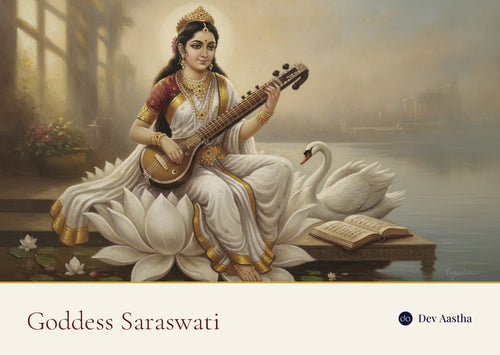
A seated goddess on a lotus reads as wealth that has settled and stayed. That is what a household wants: stability, not churn. Most family mandirs across India keep her seated in padmasana with one hand raised in blessing.
A standing goddess reads as wealth in motion, arriving and circulating. Traders and shopkeepers have traditionally preferred her standing, often as Gaja Lakshmi, because their prosperity depends on flow rather than on rest.
Beyond the posture, three details on the idol carry meaning worth knowing.
- The lotus: purity and detachment. Wealth that does not corrupt the person holding it.
- The raised right palm: the abhaya mudra, a gesture of protection and reassurance.
- The lowered left hand: the varada mudra, giving. Coins are often shown falling from it.
- The owl: her vahana or vehicle, a reminder that wealth arrives quietly and can be squandered by those who cannot see clearly.
None of this makes a standing idol wrong for a flat or a seated one wrong for a shop. It simply means the choice is not arbitrary, and picking with the symbolism in mind makes the piece feel considered rather than bought.
What size Lakshmi idol fits your mandir?
For most Indian homes, 3 to 6 inches is the working range. Anything smaller gets lost behind a diya, and anything much larger starts to dominate a shelf that has to hold several deities plus the puja thali.

| Height | Where it works | What to expect |
|---|---|---|
| 2 to 3 inches | Car dashboard, office desk, travel puja box, locker | Detail is limited at this scale. Choose a simple form. |
| 3 to 4 inches | Wall-mounted mandir, apartment puja shelf, gifting | The most common home size. Good detail, easy to place. |
| 5 to 7 inches | Floor-standing wooden mandir, dedicated puja room | Reads as the main deity. Needs surrounding space. |
| 8 inches and above | Large puja room, shop entrance, family temple | Requires a raised platform and a considered backdrop. |
Two practical habits prevent the most common sizing regret.
First, measure the internal height of your mandir, not the outside. A wooden mandir with a 9 inch opening cannot take a 7 inch idol once you allow for the crown clearance and the chandan tray in front.
Second, hold the idol size against the other deities you already keep. Traditional practice keeps the deities on one shelf at broadly similar heights, so no single murti visually outranks the rest. A 3.7 inch Lakshmi like this seated silver-plated piece sits comfortably next to a standard Ganesha of the same tier.
If the idol is a gift and you cannot see the recipient's mandir, 3 to 4 inches is the safe choice. It fits almost every setup and does not force them to rearrange a shelf to accommodate it.
How much does a silver Lakshmi idol cost in India?
Expect roughly ₹1,000 to ₹5,000 for a quality silver-plated Lakshmi, and ₹7,000 to ₹90,000 for solid 925 or 999 silver depending on weight. Lakshmi idol price is explained almost entirely by how much actual silver you are buying.
Solid silver pricing has a formula. Take the day's silver rate per gram, multiply by the idol's weight, then add making charges that usually run 10 to 25 percent. A 100 gram Lakshmi therefore moves in price week to week, the same way jewellery does.
Plated pricing works differently. You are paying for the sculpting, the mould quality, the plating thickness and the finishing, not for metal weight. That is why two plated idols of identical size can differ by ₹2,000, and why the cheaper one often looks flat in person.
| Budget | What it realistically buys |
|---|---|
| Under ₹800 | Painted or lacquered finish, no real silver. Fine for a temporary display, not a mandir. |
| ₹1,000 to ₹2,000 | A well-made 3 to 4 inch silver-plated idol with clear facial detail and gift packaging. |
| ₹2,500 to ₹5,000 | Larger plated pieces, multi-deity sets, more intricate work such as Ashta Lakshmi or a prabhavali backdrop. |
| ₹7,000 to ₹20,000 | Entry solid silver, typically 20 to 60 grams. Small but genuinely made of silver, hallmarked. |
| ₹20,000 and above | Heavier 925 or 999 pieces, 100 grams upward. Bought as heirlooms or for temple donation. |
A note on the festival window. Silver rates and idol prices both climb through September and October, and the best pieces sell out before Dhanteras rather than on it. Buying in August or early September costs less and leaves you a choice.
Seven checks before you pay
Run through these before you add anything to a cart. Each one catches a specific failure that shows up after delivery, when returning a puja item feels awkward.
- Find the word "plated" or the gram weight. One of the two must be on the page. If neither appears, ask the seller directly before ordering.
- Check for a hallmark claim on solid silver. A genuine 925 or 999 piece carries a BIS hallmark. Plated pieces do not, and should not claim one.
- Zoom into the face. The eyes and the crown are where cheap moulds fail first. Soft, melted-looking features mean a worn mould.
- Look at the base. It should sit flat without rocking. An uneven base on a puja shelf is a daily irritation.
- Confirm the exact height in inches, and check it against your mandir opening. Product photos flatten scale badly.
- Check the packaging if it is a gift. A velvet or rigid gift box changes how the piece lands. Loose bubble wrap does not.
- Read the return policy on religious items. Some sellers exclude them entirely. Know this before, not after.
One more thing worth knowing about plating quality. Thicker plating holds its lustre for years with basic care, thin plating starts showing the core at the high points within months. Sellers rarely publish micron thickness, so the honest proxy is price and finish quality in the photos.
Where to place a Lakshmi idol at home
Place her in the north or north-east of the home, raised above floor level, facing east or west. North is the direction associated with Kubera, the treasurer of the gods, which is why wealth deities are traditionally kept there.
The practical rules are few and easy to follow.
- Never on the floor. The idol sits on a chowki, a shelf or inside a mandir, always with something between her and the ground.
- Not facing south. A south-facing deity is avoided in most traditions. East or west is standard.
- Not under a staircase or against a bathroom wall. Both are considered inauspicious placements for any deity.
- Not in the bedroom if you have any alternative. A separate mandir shelf in the living room or kitchen area is preferred.
- Keep the area clean and lit. A dusty shelf undoes the intent more than any direction error.
If you keep Lakshmi and Ganesha together, the traditional arrangement places Ganesha on Lakshmi's right as you face them. This is the arrangement you will see in most Diwali puja setups, and it is the one worth following if you are unsure.
For direction-by-direction detail including what to do in a flat where the north-east is occupied, our Lakshmi idol placement and vastu guide covers the awkward cases.
When to bring her home: the auspicious days
Dhanteras and Diwali are the traditional days to buy silver and install a new Lakshmi idol, but they are not the only ones. Several other occasions carry the same weight and far less crowding.
- Dhanteras: the day before Diwali, dedicated to buying metal. Silver purchases on this day are considered especially auspicious.
- Diwali (Lakshmi Puja): the main worship night, when businesses also perform their accounts puja.
- Akshaya Tritiya: falls in April or May and is the other major day for buying precious metal.
- Varalakshmi Vratam: observed mainly in south India on a Friday in the month of Shravana.
- Any Friday: Lakshmi's weekday. A simple, low-pressure day to install a new idol.
- Griha pravesh: a housewarming is a natural moment to establish the mandir in a new home.
A word of practical advice for the festival window. If you are buying for Dhanteras, order six to eight weeks ahead. Stock on popular pieces thins from mid-September and delivery networks are congested through late October.
For the ritual itself, including the muhurat and the step order, see our guides on Dhanteras significance and shubh muhurat and the Lakshmi puja vidhi for Diwali.
How to clean and care for a silver Lakshmi idol
Dust weekly with a dry soft cloth and keep water, oil and chemical polish away from a plated idol. Silver darkens over time through contact with air and sulphur, which is normal and reversible on solid silver but risky on plating.
The care routine differs sharply between the two types, and treating a plated idol like a solid one is how people strip the finish.
For silver-plated idols
- Wipe with a dry microfibre or cotton cloth. That is the whole routine most weeks.
- For marks, use a barely damp cloth and dry immediately. Never soak or submerge.
- Do not use silver polish, toothpaste, lemon, ash or tamarind. All of these abrade the plating.
- Keep it away from direct water during abhishek. Offer water to a separate small murti kept for that purpose.
- Wipe off oil, ghee and kumkum the same day. Left overnight they mark the surface.
For solid silver idols
- A proper silver polish or a mild baking soda paste is safe, since you are polishing the metal itself.
- Abhishek with milk or water is fine, but dry the idol thoroughly afterwards.
- Store in an anti-tarnish pouch when not on display to slow oxidation.
One habit helps both types. Keep camphor and incense a little distance away rather than directly beneath the idol. The residue settles on the surface and dulls the lustre faster than anything else in a puja room.
Mistakes that quietly spoil the purchase
Most regrets in this category come from four avoidable errors, none of which are about spending too little.
- Assuming silver-coloured means silver. The ₹400 idol that looks identical in photos is painted. Six months of aarti smoke makes the difference obvious.
- Buying by photo without checking inches. A 2.5 inch idol photographed alone looks the same size as an 8 inch one. This is the single most common return reason.
- Polishing a plated idol. One enthusiastic clean with metal polish and the core shows through at the crown and the fingertips. The damage is not repairable at home.
- Waiting for Dhanteras to shop. By then the good pieces are gone and you are choosing from what is left, at the year's highest prices.
There is a fifth, softer mistake. Buying a much larger and more expensive idol than the mandir can hold, because the occasion felt like it demanded scale. A well-finished 4 inch piece on a clean, well-lit shelf reads better than a 9 inch one crammed into a cupboard.
Frequently asked questions
Is a silver-plated Lakshmi idol acceptable for daily puja?
Yes. Tradition places no restriction on plated idols for household worship, and scripture is concerned with the form, the consecration and the devotion rather than the metal content. Solid silver is preferred for temple installation and for heirloom pieces meant to pass down generations. For a home mandir, a well-made silver-plated idol is entirely appropriate and is what most Indian households actually keep.
How can I tell if a Lakshmi idol is real silver or just plated?
Check for a stated gram weight and a BIS hallmark. Solid silver is sold by weight, so any genuine seller lists grams and a 925 or 999 stamp. Plated idols are listed by height in inches with no weight given. Solid silver also feels distinctly heavy for its size and stays cool to the touch. If a listing shows neither a hallmark nor a weight, treat it as plated.
Which direction should a Lakshmi idol face at home?
Place the idol in the north or north-east of the home with the goddess facing east or west. North is associated with Kubera, the treasurer of the gods, which makes it the traditional zone for wealth deities. Keep her raised on a shelf or chowki rather than on the floor, and avoid a south-facing position, a spot under a staircase, or a wall shared with a bathroom.
Should Lakshmi be seated or standing for a home?
Seated is the usual choice for a home. A seated posture on a lotus symbolises wealth that has settled and remains, which suits a household. Standing forms, particularly Gaja Lakshmi flanked by elephants, symbolise wealth in motion and are traditionally favoured by shops and businesses. Neither is prohibited in either setting; the distinction is about symbolism, not rules.
What size Lakshmi idol is best for a home mandir?
Between 3 and 6 inches works for most homes. Measure the internal height of your mandir and leave clearance for the crown and for the tray in front. Keep the idol at a similar height to the other deities on the same shelf so none visually dominates. If you are buying as a gift and cannot see the recipient's setup, 3 to 4 inches is the safest choice.
Can I clean a silver-plated idol with silver polish?
No. Silver polish, toothpaste, lemon, ash and tamarind are all abrasive and will wear through the plating, exposing the core at the raised points. Dust a plated idol with a dry soft cloth, and for marks use a barely damp cloth followed by immediate drying. Polishes are only safe on solid silver, where you are working on the metal itself.
Ghar ke liye chandi ki Lakshmi murti kaunsi leni chahiye?
Ghar ke mandir ke liye 3 se 6 inch ki baithi hui (seated) Lakshmi murti sabse upyukt hoti hai, kamal par virajman aur ek haath ashirvad mudra mein. Agar aap pehli baar mandir sthapit kar rahe hain to Lakshmi Ganesh ki jodi lena aasan rahta hai. Chandi ki thos (solid) murti ka daam gram ke hisaab se hota hai, jabki silver-plated murti 1,000 se 5,000 rupaye mein achhi quality mein mil jaati hai.
Murti ko uttar ya ishaan kon mein, zameen se upar chowki par rakhein, aur mukh purab ya paschim ki taraf rakhein. Roz sirf sookhe mulayam kapde se saaf karein, polish ka istemal na karein.
Explore more
Related guides: The eight forms of Goddess Lakshmi · Lakshmi idol placement and vastu · Lakshmi puja vidhi for Diwali
Shop the collection: Lakshmi idols for home · Lakshmi Ganesh idol sets
Featured pieces: Ashta Lakshmi tortoise idol

Arun Mehta
Arun covers Hindu traditions, vastu and festivals for Dev Aastha, translating time-honoured practices into clear, practical guidance for modern Indian homes. His writing draws on scriptural sources and the lived traditions of devout households.
Arun covers Hindu traditions, vastu and festivals for Dev Aastha, translating time-honoured practices into clear, practical guidance for modern Indian homes. His writing draws on scriptural sources and the lived traditions of devout households.
Keep reading
More from the journal