Buying Guides
Lakshmi Ganesh Idol Set: Meaning, Significance and Where to Place It for Diwali
Sep 26, 2026


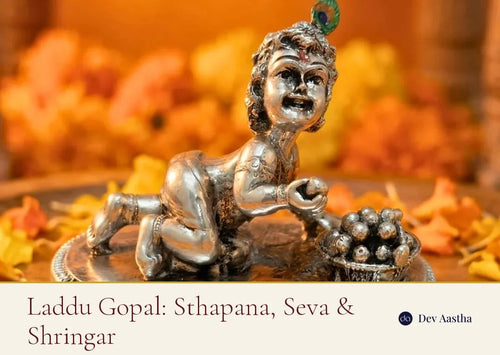
In many Indian homes, Laddu Gopal is not just an idol on the shelf. He is treated as a beloved infant of the family, woken in the morning, bathed, dressed, fed and put to sleep at night with real tenderness.
This guide covers the complete Laddu Gopal shringar and seva, the way devout households actually do it: the daily routine, how to dress and adorn him step by step, the day-wise colours, the bhog he loves, and the simple niyam everyone asks about. Whether you are bringing Bal Gopal home for the first time or want to do his seva with more care, you will find a clear, practical path here.
Laddu Gopal is the infant form of Lord Krishna, worshipped as the playful, butter-loving child of Gokul. The name joins "laddu", his favourite sweet, with "Gopal", the cowherd, one of Krishna's tender names.
Devotees also call him Bal Gopal, Kanha, or Thakur Ji. What makes his worship special is the bhav, the feeling, behind it. He is not approached as a distant god but as a small child of the home, loved like a son and cared for through the day.
This child-like seva is rooted in the vatsalya bhav, the love a parent feels for a baby, celebrated through Krishna's Gokul leelas in the Bhagavata Purana. Serving Laddu Gopal lets a family pour that same affection into daily worship.
Seva means loving, selfless service, and shringar is the part of that service where you bathe, dress and adorn Laddu Gopal. Together they turn worship into a daily relationship rather than a one-time ritual.
Shringar is not about display. Choosing his poshak, fastening a tiny mukut, placing a bansuri in his hand, all of it is an act of love, the way a parent dresses a child with care. The simplest cotton dress offered with devotion pleases him more than the richest one offered carelessly.
In the deeper tradition of Vrindavan, sages describe an ashtayam seva, eight periods of service through the day and night. At home, this becomes a gentle, doable routine. The spirit is the same: keep Kanha at the centre of your day.
The daily seva moves with the rhythm of a child's day, from waking to sleeping. You can keep it short on busy mornings and fuller on holidays. Here is the simple home version of the routine.
Begin the day by gently waking Laddu Gopal, ringing a small bell or softly singing his name. Open the curtains of his place and greet him as you would a sleeping child.
Bathe him with clean water, and on special days with panchamrit, the mix of milk, curd, ghee, honey and sugar. Rinse with water, then pat him dry gently with a soft cloth so no moisture stays on the idol.
Dress him in a fresh poshak, then add the mukut, mala, bansuri and a small tilak. This is the heart of the seva, covered step by step in the next section.
Offer the morning bhog, light a diya and incense, and sing a short aarti such as "Aarti Kunj Bihari Ki". Many homes offer bhog again at noon and in the evening.
At night, lay Laddu Gopal in a small bed or jhula, cover him with a light cloth, and offer a final pranam. Some families sing a soft lullaby as they would for a baby.

You do not have to do all five steps every day. On a rushed morning, a quick wake, a fresh tilak and a small bhog are enough. Devotion, not the length of the ritual, is what reaches Kanha.
The Laddu Gopal shringar is the loving act of bathing and dressing him after he wakes. Keep his samagri ready in one box so the morning stays calm. Here is the order most families follow.
Bathe him with clean water or panchamrit, then rinse and dry him gently. A delicate idol only needs a sprinkle and a soft wipe. Never leave water sitting on the surface.
Dress him in a clean Laddu Gopal poshak that fits his size. Use breathable cotton in summer and warmer fabric in winter, just as you would dress a child for the season. Match the colour to the day if you follow that tradition.
Place the mukut (crown) with the mor pankh, and set the bansuri (flute) in his hand. Add a small mala, kamarbandh and bracelets if you have them. Keep it comfortable and secure, never tight.
Apply a chandan or kumkum tilak on his forehead, and a tiny dot of kajal, which families lovingly add to protect a child from nazar. A fresh flower or tulsi leaf near him completes the shringar.

If you are new to this, start simple: a clean dress, a tilak and a flower. You can add ornaments slowly as your seva grows. Once he is dressed, you are ready for bhog and aarti.
Many devotees dress Laddu Gopal in a different colour each day of the week, linking the day to its ruling planet and deity. This day-wise shringar is a beautiful way to keep the seva fresh and feel connected to the cosmic rhythm.
This is a loving tradition, not a strict rule. Customs vary by family and region, so treat the table below as a popular guide rather than a fixed law.
| Day | Common colour | Association |
|---|---|---|
| Monday | White or cream | Chandra (Moon), linked to Shiva |
| Tuesday | Red | Mangal, strength and courage |
| Wednesday | Green | Budh, harmony and balance |
| Thursday | Yellow | Guru (Brihaspati), knowledge |
| Friday | White or pink | Shukra, beauty and grace |
| Saturday | Blue or dark blue | Shani, calm and discipline |
| Sunday | Red, orange or pink | Surya (Sun), energy and vitality |
If keeping seven poshak feels like a lot, a few well-chosen colours are plenty. Yellow is always dear to Krishna, since it is the colour of his pitambar, so it is a safe and loving choice on any day.
Bhog is the food you lovingly offer Laddu Gopal, and as a child he is fondest of simple, sweet, milky things. The offering matters less than the love and cleanliness with which it is made.
The most loved everyday bhog offerings are:
A few gentle rules help. Offer only fresh, satvik food made with clean hands, add a tulsi leaf to the bhog as Krishna loves it, and avoid onion and garlic in anything cooked for him. After offering, share the bhog as prasad with the family.
A few simple niyam, or guidelines, keep the seva loving and consistent. None of them are meant to make worship stressful, so follow what your heart and your home allow.
Yes, you can keep more than one Laddu Gopal, and many families do. The only real niyam is consistency: once you bring Kanha home, his daily seva is a loving commitment, so keep only as many as you can truly care for each day.
Treat him as you would a child. Use light cotton poshak and offer cooling foods like makhan and fruit in summer, and warmer fabric with kheer or halwa in winter. Small seasonal touches keep the seva alive and personal.
Janmashtami, Krishna's birthday, is the grandest day in a Laddu Gopal household. The shringar that night is special, often the finest poshak of the year, because you are welcoming the newborn Kanha himself.
On Janmashtami, families bathe Laddu Gopal at midnight, the hour of Krishna's birth, with panchamrit and Gangajal. He is then dressed in new clothes, placed in a decorated jhula (cradle), and offered a full bhog with makhan-mishri, panjiri and 56 bhog where it is the custom.
Other festivals bring their own touches. On Holi, devotees play gentle gulal with him, and on Nand Mahotsav the day after Janmashtami, the celebration of his naming continues. These special shringars are what make a year of seva feel like a living relationship.
The idol you choose shapes how easy the daily seva feels. For worship that involves bathing and dressing every day, you want a piece that is sturdy, the right size, and pleasant to handle.
A few practical pointers when choosing:
A silver-plated piece gives the bright silver lustre families love for the mandir without the cost of solid silver, and it stands up to daily handling. A small silver-plated Laddu Gopal idol suits this everyday seva, and you can explore other forms of Kanha in the Krishna idols collection. As the eighth avatar of Vishnu, Krishna is also worshipped in many other forms across the home.
For daily care, wipe him dry after every snan, keep his poshak and ornaments clean, and store spare clothes in a dust-free box. A little routine keeps both the idol and the seva beautiful for a lifetime.
Bathe Laddu Gopal with clean water or panchamrit and dry him gently. Then dress him in a fresh poshak, place a mukut with mor pankh, set a bansuri in his hand, add a small mala, and apply a chandan or kumkum tilak with a tiny kajal dot. Match the poshak colour to the day if you follow that tradition.
Yes, you can keep four or even more Laddu Gopal at home. There is no scriptural limit on the number. The real commitment is the daily seva, so keep only as many as you can lovingly bathe, dress and feed each day.
On Saturday, many devotees dress Laddu Gopal in blue or dark blue, the colour linked to Shani and to calm discipline. Customs vary by family, so a different shade offered with devotion is equally accepted.
Laddu Gopal loves makhan-mishri (white butter with rock sugar) above all, along with panjiri, laddu and milk sweets. Always offer fresh, satvik food with a tulsi leaf, and avoid onion and garlic in anything cooked for him.
Subah Laddu Gopal ko prem se jagayein, snan karayein aur saaf kapde se pochhein. Phir naya poshak pahnayein, mukut aur bansuri sajayein, tilak karein, bhog lagayein aur aarti karein. Raat ko unhein chhote palne mein sulayein. Har din do-teen step bhi shraddha se karein to seva poori hoti hai.
Related guides: The 10 avatars of Vishnu · Choosing god idols for your pooja room · Silver-plated vs pure silver: an honest buyer's guide · Janmashtami 2026 puja vidhi: a step-by-step home guide · Jewellery for god idols: a complete guide · लड्डू गोपाल: स्थापना, सेवा, श्रृंगार और घर में रखने के नियम की पूरी विधि
Shop the collection: Krishna idols
Featured pieces: Laddu Gopal silver-plated idol · Shringar Krishna idol · Shrinath Ji idol

Keep reading